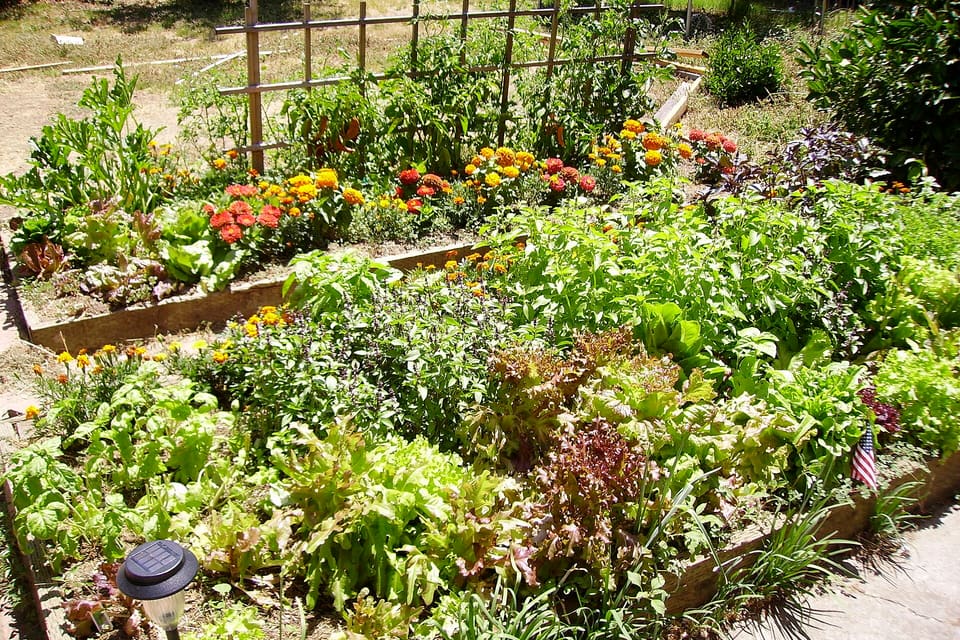
Design
How to Plan a Raised Bed Vegetable Garden
Choose the place, the size, and the layout of your raised beds before you build. A good plan saves money, water, and many hours of work.
Plan a raised vegetable bed square by square. See how many plants fit, where the tall crops go, and print or share your plan. Free, with no sign-up.
North
South: the sun comes from this side
The bed is empty.
One square is 30 cm by 30 cm, which is about 1 square foot.
| Crop | Plants in one square | Note |
|---|---|---|
| Tomatoes | 1 | Tall: put it on the north edge |
| Cucumbers | 2 | Tall: put it on the north edge |
| Pole beans | 8 | Tall: put it on the north edge |
| Peas | 8 | Tall: put it on the north edge |
| Peppers | 1 | |
| Broccoli | 1 | |
| Cabbage | 1 | |
| Kale | 1 | |
| Lettuce | 4 | Likes some shade in summer |
| Chard | 4 | |
| Basil | 4 | |
| Marigolds | 4 | |
| Bush beans | 9 | |
| Spinach | 9 | Likes some shade in summer |
| Beets | 9 | |
| Onions | 9 | |
| Garlic | 9 | |
| Carrots | 16 | |
| Radishes | 16 |
The top of the bed in the planner is north. When your plan is ready, copy the link to keep it, or print it and take it outside.
A grid of squares is the simplest way to space plants in a small bed. Each crop has a number of plants that fit in one square: one tomato, four lettuces, or sixteen carrots. You do not need rows or a measuring tape. You also sow less seed and thin out fewer seedlings.
The numbers in the planner are close spacing for a bed with good soil. One tomato in a square means a tall variety that you tie to a stake and prune to one main stem. A bush tomato that you leave to spread needs about four squares. A seed packet that asks for more space is right for that variety, so follow the packet.
In the northern half of the world, the sun stands in the south. A tall crop shades what grows to the north of it. Put tomatoes, cucumbers on a frame, pole beans, and peas on the north edge of the bed, and they shade the path and not your other plants.
The planner tells you when a tall crop stands in front of a short one. Shade is not always bad: lettuce and spinach run to seed in hot sun, and they do better behind a tall neighbor in summer.
The post on how to plan a raised bed vegetable garden explains where to put the bed itself, how wide to make it, and what to build it from.
Good spacing matters more than any pairing. Many charts of plants that "love" or "hate" each other have little proof behind them. What does help is a mix: flowers at the edge to feed helpful insects, and fast crops such as radishes between slow ones. The guide to companion planting for vegetables separates what works from what is only tradition.
Choose the place, the size, and the layout of your raised beds before you build. A good plan saves money, water, and many hours of work.
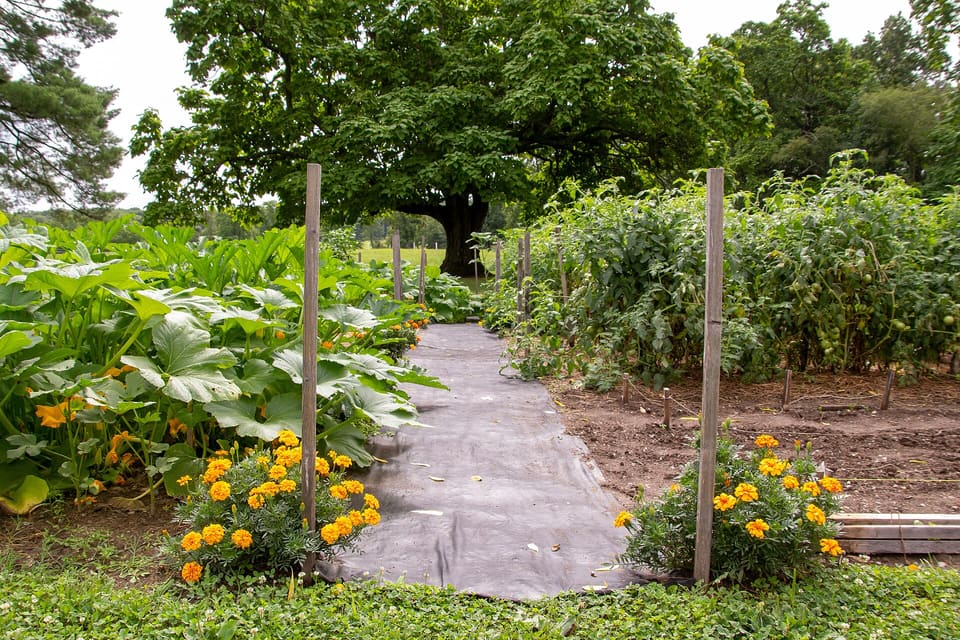
Which plant partners really help vegetables, which are only tradition, and five simple combinations to try in your own beds this season.
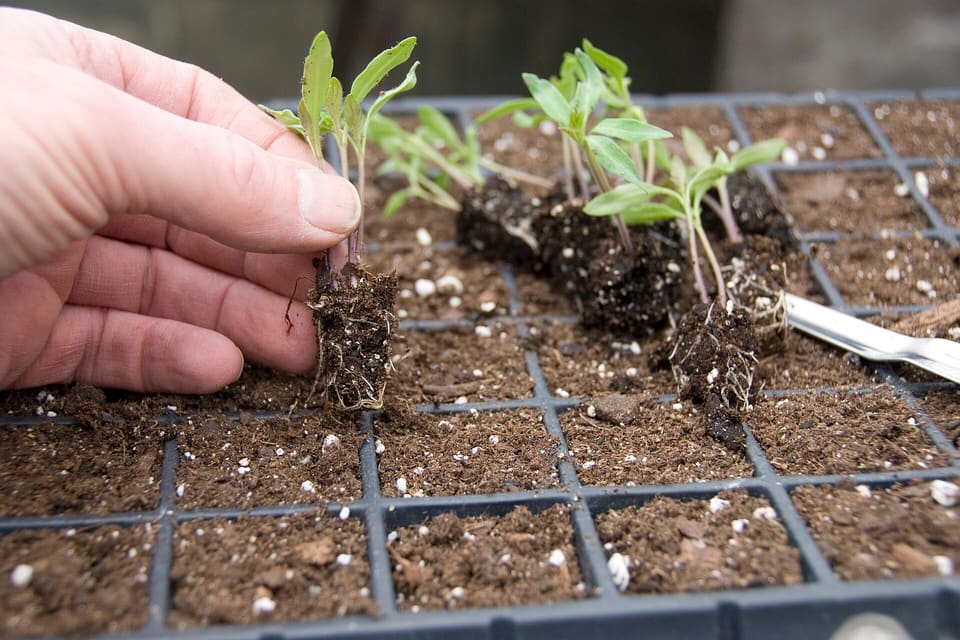
A season-by-season list of vegetables, flowers, and bulbs to plant, with the soil and frost signs that tell you when to start.