Companion planting for vegetables means growing different plants close together so that one helps the other. Some of it works well, and some of it is garden folklore. The parts that hold up are simple: flowers that feed helpful insects, mixed plantings that confuse pests, tall plants that give shade, and partners that use space at different times. This guide separates those from the claims that are repeated more often than they are tested.
How can one plant help another?
There are five ways that are well established.
Flowers bring helpful insects
Hoverflies, lacewings, ladybugs, and tiny parasitic wasps eat or kill aphids, caterpillars, and other pests. The adults of many of them feed on nectar and pollen, and they need small, open flowers to reach it. A vegetable bed with flowers in it keeps these helpers close to your crops.
Good choices are sweet alyssum, calendula, dill, cilantro and fennel left to flower, phacelia, and yarrow. The same flowers also draw bees, which squash, cucumbers, and beans need to set fruit. The guide to the best plants for pollinators lists more by season.
A mix is harder for pests to find
Many pests find their host plant by sight and by smell. A large block of one crop is an easy target. When the same crop grows in smaller groups among other plants, fewer pests land on it and stay. This is one reason that onions or leeks between rows of carrots, and herbs among cabbages, are worth trying. They do not make a wall that pests cannot cross, but they tilt the odds in your favor.
Tall plants give shade and support
Lettuce, spinach, and cilantro run to seed in hot sun. Plant them on the north or east side of tomatoes, pole beans, or corn, and they get shade in the hottest hours. Sturdy plants can also hold up climbers: pole beans will climb corn stalks or sunflowers.
Trap crops pull pests away
A trap crop is a plant that a pest likes more than your vegetable. Nasturtiums draw black aphids. Radishes draw flea beetles away from young cabbage-family seedlings. A trap crop works only if you act on it: check it often, and pull out or cut down the worst plants along with their pests.
Fast crops fill gaps
Radishes and lettuce are ready in a few weeks. Sow them between slow crops such as parsnips, cabbages, or tomatoes. They are harvested before the large plants need the room, and they cover bare soil in the meantime.
What about beans and nitrogen?
Beans and peas are legumes. Bacteria on their roots take nitrogen from the air. That is true, but most of that nitrogen stays in the bean plant while it grows. A neighbor gets very little of it during the season. The soil gains when the roots and stems rot down afterward, so cut the plants off at ground level when they finish, and leave the roots in the bed.
Which famous pairings are only tradition?
Be skeptical of long charts that say which plants "love" or "hate" each other. Most of those lists were copied from book to book, and few of the pairs were ever tested in a careful way.
- Basil makes tomatoes taste better. There is no good evidence for this. They like the same warmth and water, and they are handy together in the kitchen, so plant them together for that reason.
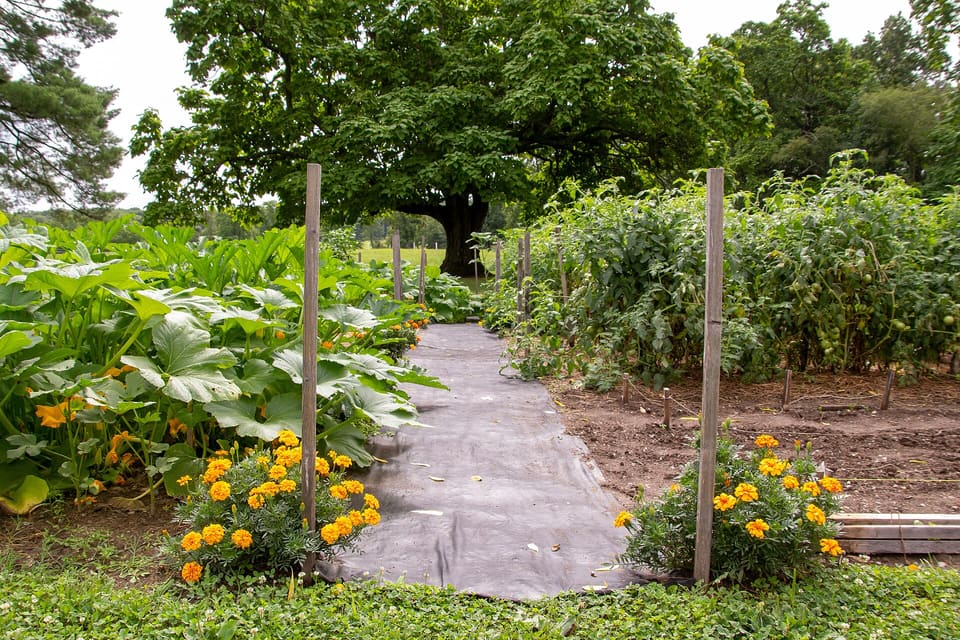
- Marigolds keep all pests away. French marigolds can lower the numbers of some root nematodes, but only when they are grown thickly across a bed for a whole season. A few marigolds at the end of a row do not protect it. They do feed helpful insects, and that is reason enough to grow them.
- Carrots and onions protect each other from flies. The effect is real in some trials but small, and it fades when the onions start to form bulbs. A fine mesh cover does much more.
- Plants that "hate" each other. A few are real. Fennel slows the growth of many neighbors, and black walnut trees harm tomatoes and their relatives. Most other warnings have little behind them.
Five combinations that are worth trying
| Combination | Why it helps |
|---|---|
| Lettuce on the shady side of tomatoes or pole beans | Shade keeps lettuce from bolting in summer. |
| Sweet alyssum or calendula along the edge of any bed | Feeds hoverflies and other insects that eat aphids. |
| Nasturtiums near beans or brassicas | Draws black aphids, where you can deal with them in one place. |
| Radishes sown in the same row as carrots or parsnips | Radishes mark the row and are gone before the roots need room. |
| Corn, pole beans, and winter squash together | Corn holds up the beans, and squash leaves shade the soil. Needs space and warm soil. |
The last one is the traditional "three sisters" planting of many Native American peoples. It works best in a block of at least 10 by 10 feet. Sow the corn first, and add the beans and squash when the corn is about 6 inches tall.
What mistakes should you avoid?
- Crowding. A companion is still a competitor for light, water, and food. Give each plant its normal spacing. A stunted tomato under a jungle of herbs is not helped.
- Mint in the bed. Mint spreads by roots and takes over. Grow it in a pot, and set the pot near the vegetables.
- Expecting a cure. Companion planting lowers pest pressure. It does not remove it. Keep checking your plants, and use the other methods of organic pest control for vegetable gardens when you need them.
How do you start?
Start small. Add a strip of flowers to one vegetable bed this year, and tuck lettuce behind your tallest crop. Those two changes cost almost nothing and are the most likely to show a result. If you are still laying out your beds, the post on how to plan a raised bed vegetable garden shows where to leave room for flowers and where the shade will fall.