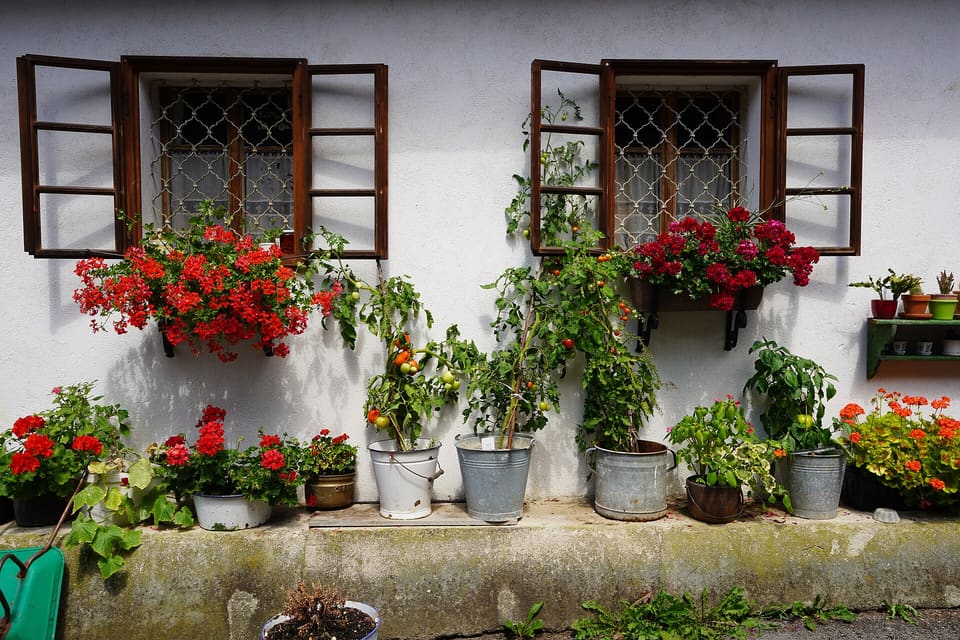
How often to water tomatoes in pots depends on the weather and the size of the plant, but the usual answer is this: every 2 to 3 days in cool spring weather, once a day in warm summer weather, and twice a day in a heat wave. Use this as a start point, and let the soil decide. Push a finger into the potting mix, and water when the top inch is dry.
Why do tomatoes in pots need so much water?
A tomato in the ground can send its roots deep and wide to find water. In a pot, the roots have only the mix that you gave them. A large plant with fruit on a hot, windy day can use all the water in its pot before evening. The sides of the pot also get warm in the sun, which dries the mix faster.
So the plant depends on you completely, and regular watering matters more than for almost any other crop.
How often to water, by weather and growth stage
| Conditions | How often |
|---|---|
| Young plant, cool spring weather | Every 2 to 3 days |
| Growing plant, mild weather | Every 1 to 2 days |
| Large plant with fruit, warm summer weather | Once a day |
| Heat wave, strong wind, or a small pot | Morning and evening |
| Cool, cloudy, or rainy days | Test first. Often not necessary. |
The table is a guide, not a schedule. Rain does not always count: the leaves of a large plant act as an umbrella, and little water reaches the mix. Test after a shower too.
How do you know when to water?
The finger test. Push your finger into the mix up to the first knuckle, about an inch. If it feels dry at that depth, water. If it feels damp and cool, wait and test again later.
The weight test. Tilt or lift the pot a little. A dry pot is clearly lighter than a wet one. After a week, you know the difference without thinking.
The plant. Leaves that hang in the morning mean that the plant is too dry. Water it immediately. Leaves that droop a little in the hot afternoon but recover in the evening are normal. That is how the plant protects itself from heat. Test the mix before you water.
How to water correctly
- Water in the morning. The plant then has water for the hot part of the day, and leaves that got wet dry quickly.
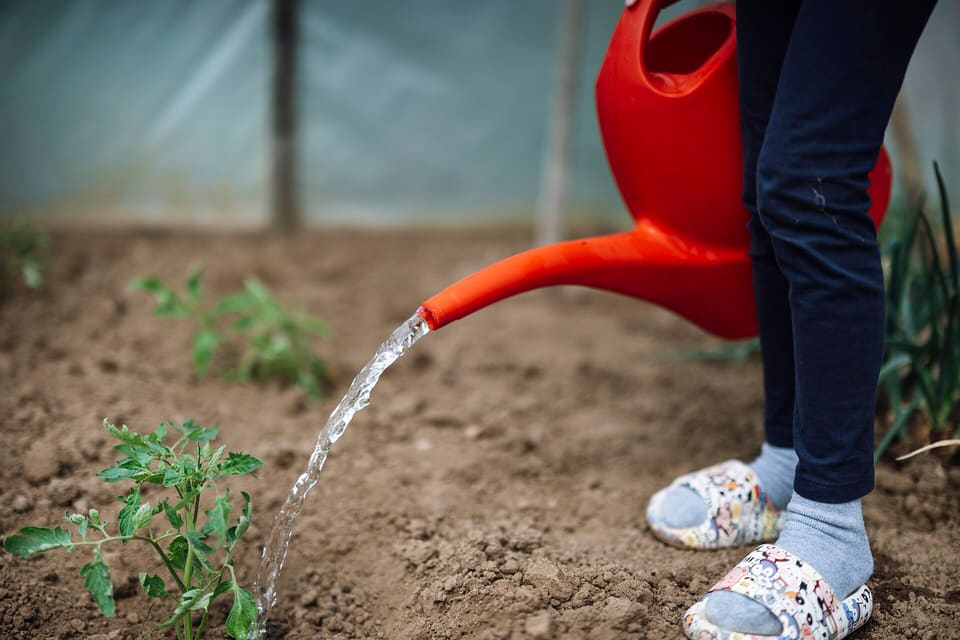
- Water the mix, not the leaves. Pour at the base of the stem. Wet leaves get diseases such as blight more easily.
- Water slowly and deeply. Continue until water runs out of the drainage holes. Then you know that the full root ball is wet. A quick splash wets only the top, and the roots stay near the surface.
- Water a second time if the mix was very dry. Dry potting mix shrinks away from the sides of the pot, and water runs down the gap and out. Water, wait ten minutes, and water again.
How much is that? As a rough guide, a full-size plant in a pot of 10 gallons or more can take a gallon or more on a hot day. But the drainage holes are a better measure than a number.
Can you water tomatoes too much?
Yes. Mix that is wet all the time has no air, and the roots rot. The signs are yellow lower leaves, a plant that wilts although the mix is wet, and a sour smell. Fruit from plants with too much water also has less flavor.
Make sure that the pot has drainage holes and that they are not blocked. Do not let the pot stand in a full saucer for days. In a hot spell, a saucer is useful for an hour or two, because the plant can drink what ran through. Empty it after that.
What does uneven watering do?
Tomatoes do not like a cycle of very dry and very wet.
- Blossom end rot. A dark, sunken, leathery patch appears on the bottom of the fruit. The cause is that the fruit does not get sufficient calcium, and in pots the usual reason is uneven moisture, not a lack of calcium in the mix. Remove the fruit that has it, and keep the mix evenly moist. Later fruit is usually normal.
- Split fruit. If a dry plant gets a large quantity of water, the fruit swells faster than its skin can grow, and the skin cracks.
Regular watering prevents both problems.
How to make watering easier
- Use a larger pot. More mix holds more water. For a full-size tomato, use a pot of 10 gallons or more. Small bush and patio types grow in 5 gallons. The guide to container gardening for beginners has more about pots and potting mix.
- Choose the material. Plastic and glazed pots lose less water than unglazed clay. Dark pots get hot in full sun.
- Group your pots. Pots that stand together shade each other's sides.
- Try a self-watering pot. A pot with a water tank in its base gives the roots a steady supply, and you fill it every few days.
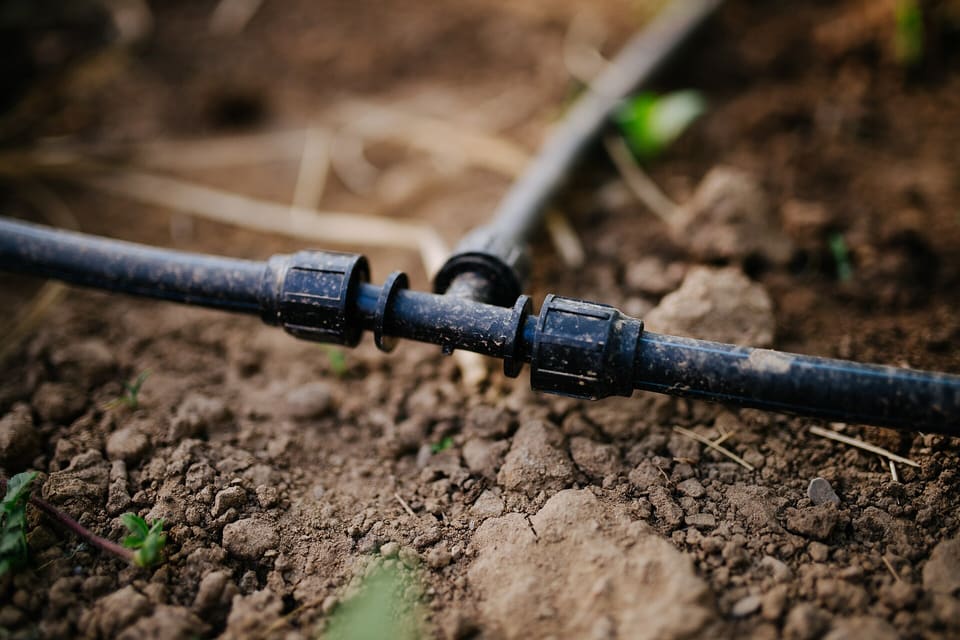
- Add a drip line. If you have many pots or you travel, a simple line with a timer does the work. See the comparison of drip irrigation and a soaker hose to choose a system.
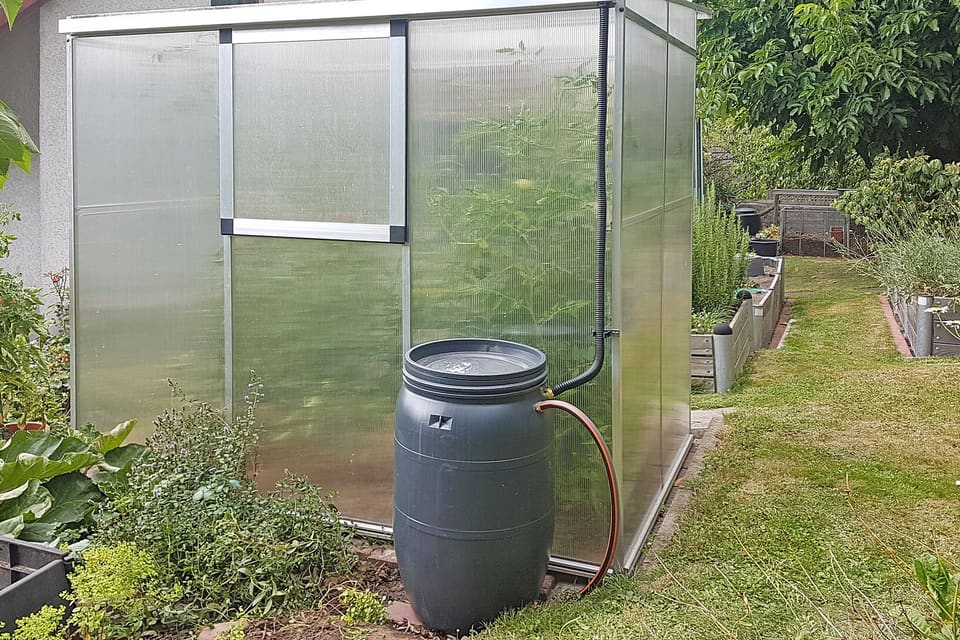
If you want to use less water in the rest of your yard too, the guide to saving water in the garden explains mulch, rain barrels, and the best time to water.