Drip irrigation or soaker hose? For a small, level bed with plants in close rows, a soaker hose is cheaper and does the job. For anything larger, sloped, or planted with gaps between plants, and for containers, drip irrigation is better because it delivers the same amount of water to every plant. Both beat a sprinkler or a hand-held hose for saving water.
How does each one work?
A soaker hose is a porous hose, often made from recycled rubber. Water seeps slowly out through the wall along its whole length. You snake it through a bed, connect it to a tap, and turn the water on low.
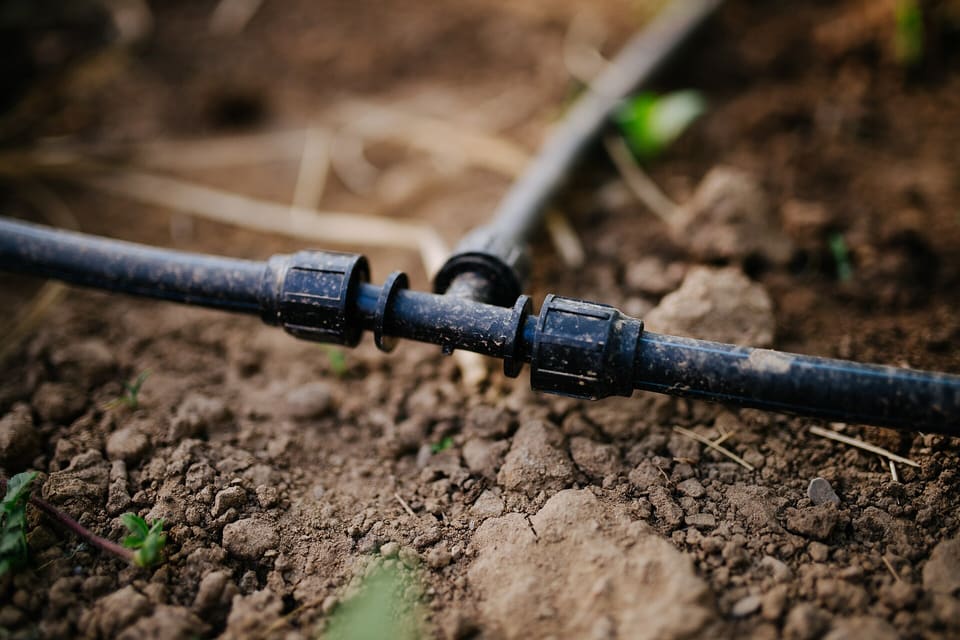
Drip irrigation is a system of solid plastic tubing with small outlets, called emitters, at fixed points. Each emitter lets out water at a known, slow rate. You can buy tubing with emitters already built in at regular spacing, or plain tubing that you punch emitters into exactly where the plants are. A basic kit also has a filter and a pressure regulator at the tap end, because drip parts are made to run at a lower pressure than a household tap supplies.
Side by side
| Soaker hose | Drip irrigation | |
|---|---|---|
| Cost to start | Low | Medium |
| Setup | Minutes: unroll and connect | An hour or two: cut, connect, and place |
| Evenness | More water near the tap, less at the far end | Close to the same at every emitter |
| Slopes | Poor: water runs to the low end | Good, with pressure-compensating emitters |
| Long runs | Keep them short | Handles long runs |
| Widely spaced plants | Wastes water between plants | Waters only where there is a plant |
| Containers | Not practical | Works well |
| Life | A few seasons | Many years |
| Clogging | Pores block over time, hard to fix | Filter prevents most clogs, parts can be replaced |
When is a soaker hose the right choice?
Choose a soaker hose when:
- The bed is level, or close to it.
- The plants grow in dense rows or blocks, such as carrots, beets, lettuce, onions, or a hedge.
- The run from the tap is short. Long hoses and hoses joined end to end water unevenly, so keep each run to roughly 100 feet or less and shorter if you can.
- You want something that works today with no tools.
Lay the hose in gentle curves about a foot or so apart in sandy soil and a little farther in clay, because water spreads sideways more in heavy soil. Pin it down with wire staples. Open the tap only a quarter turn or so. The hose should weep, not spray. If you see fine jets of water, the pressure is too high, and the hose will split sooner.
When is drip irrigation the better choice?
Choose drip when:
- The ground slopes. Pressure-compensating emitters give the same flow at the top and the bottom.
- Plants are spaced apart, such as tomatoes, peppers, squash, shrubs, or fruit bushes. You put an emitter at each plant and none in between, so you do not water the weeds.
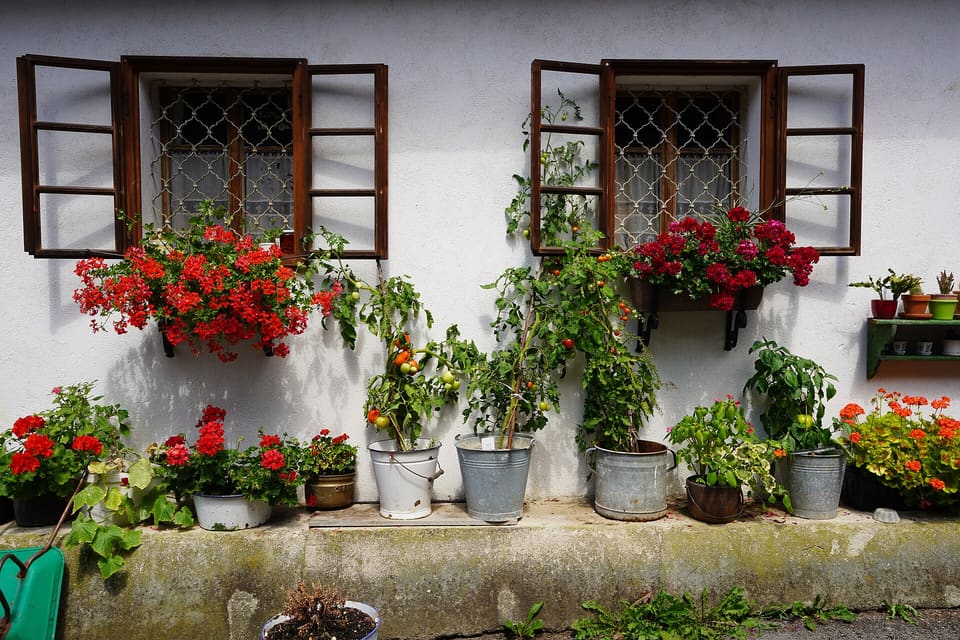
- You grow in pots. A thin line with one emitter per pot can water a whole patio from one tap. This takes most of the daily work out of container gardening.
- You have several beds. Solid tubing can carry water past paths and lawn without wetting them.
- You want to set it once and use it for years.
Drip takes a little planning. Sketch your beds, measure the runs, and buy a kit that matches. Lay the tubing in the sun for an hour before you start, because warm tubing is far easier to unroll and push onto fittings.
How long should you run it?
There is no single number, because soil, weather, and flow rates differ. Find your own:
- Run the system for 30 minutes.
- Wait an hour, then dig a small hole with a trowel next to a plant.
- Look at how deep the moisture goes. You want damp soil 6 to 8 inches down for most vegetables.
- If it is dry below a few inches, run it longer next time. If water pools on the surface, run it for less time but more often.
Water deeply and less often, not a little every day. Deep watering sends roots down, where the soil stays moist for longer. In most summer weather, two or three long sessions a week do more good than a short daily one. Sandy soil and pots are the exceptions and need water more often.
Tips that help both systems
- Cover the lines with mulch. Two or three inches of straw, bark, or shredded leaves over the hose or tubing cuts evaporation and protects the plastic from sunlight.
- Add a timer. A simple battery timer at the tap stops you from forgetting the water for half a day. Set it for early morning.
- Fit a backflow preventer. This small part stops garden water from being drawn back into the house supply. Many kits include one.
- Flush and store. Before the first hard freeze, drain the lines. Open the far ends to flush out grit, then bring the timer, filter, and regulator indoors.
- Check during the season. Walk the lines once a month while the water is running. Look for dry plants, leaks, and blocked emitters.
The short answer
Start with a soaker hose if you have one or two level beds and want low cost and no setup. Go to drip if you garden on a slope, in pots, or in more than a couple of beds, or if you are tired of replacing soaker hoses.
Either way, you will use less water than you would with a sprinkler, and dry leaves mean fewer leaf diseases. The system is only one part of the picture. Mulch, soil, and timing matter just as much, and the guide on how to save water in the garden covers them all.