The best way to save water in the garden is to keep the water you already have in the soil: cover the soil with mulch, water deeply at the roots in the early morning, and add organic matter so the ground holds moisture longer. After that, collect rain and choose plants that need less. Most gardens can use far less water without any loss, and the plants are often healthier for it.
How do you know when a plant needs water?
Many gardens are watered by habit. A quick check prevents most of that waste.
Push a finger into the soil up to the second knuckle. If the soil is moist at your fingertip, do not water. If it is dry, water. For beds, dig a small hole with a trowel a few hours after you water, and look at how deep the water went. It should reach 6 inches or more for vegetables and perennials.
Wilted leaves in the heat of the afternoon do not always mean dry soil. Many plants droop to protect themselves and recover by evening. Check again the next morning. If the plant is still wilted, it needs water.
Water deeply, and less often
A light sprinkle each day wets only the surface. The roots stay shallow, and the plant suffers as soon as you miss a day. A long, slow soak once or twice a week does the opposite. The water goes deep, the roots follow it, and the plant can go longer between waterings.
- Water slowly, so the water sinks in and does not run off.
- On a slope or on hard soil, water in two short rounds with a pause between.
- Give new plants a shallow basin of soil around the stem to hold the water.
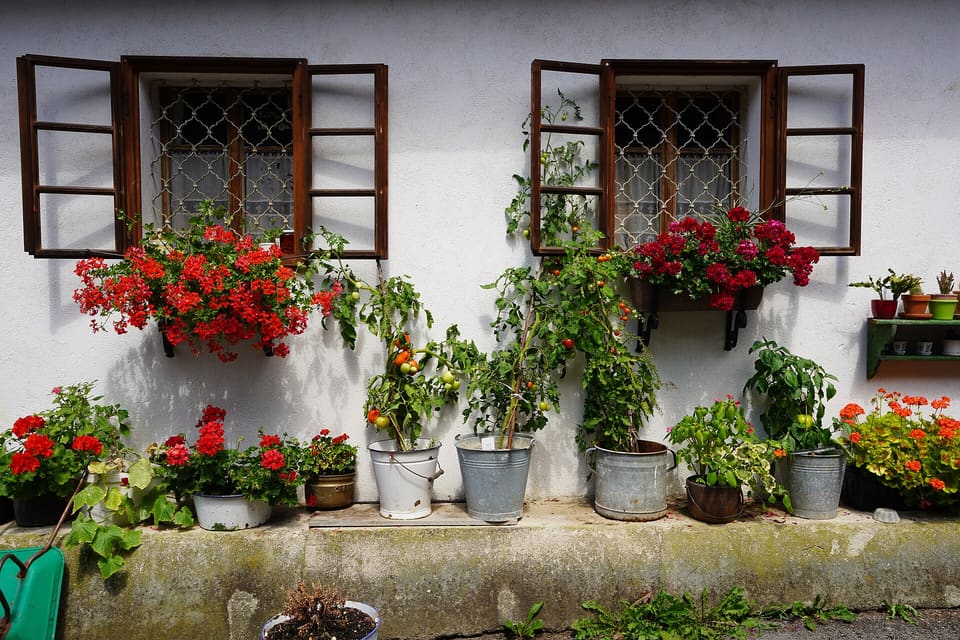
Established trees, shrubs, and most perennials need extra water only in long dry periods. Young plants in their first season need regular water until their roots spread. Pots are a special case, because they dry out much faster than the ground. The post on how often to water tomatoes in pots shows how to judge it.
What is the best time to water?
Early morning is best. The air is cool and still, so less water evaporates, and the plant has the water before the heat of the day. Wet leaves also dry quickly in the morning sun.
Evening is the second choice. Less water evaporates, but leaves that stay wet all night invite fungus and slugs. If you water in the evening, keep the water on the soil.
Avoid the middle of the day, when much of the water evaporates before it reaches the roots.
Put the water where the roots are
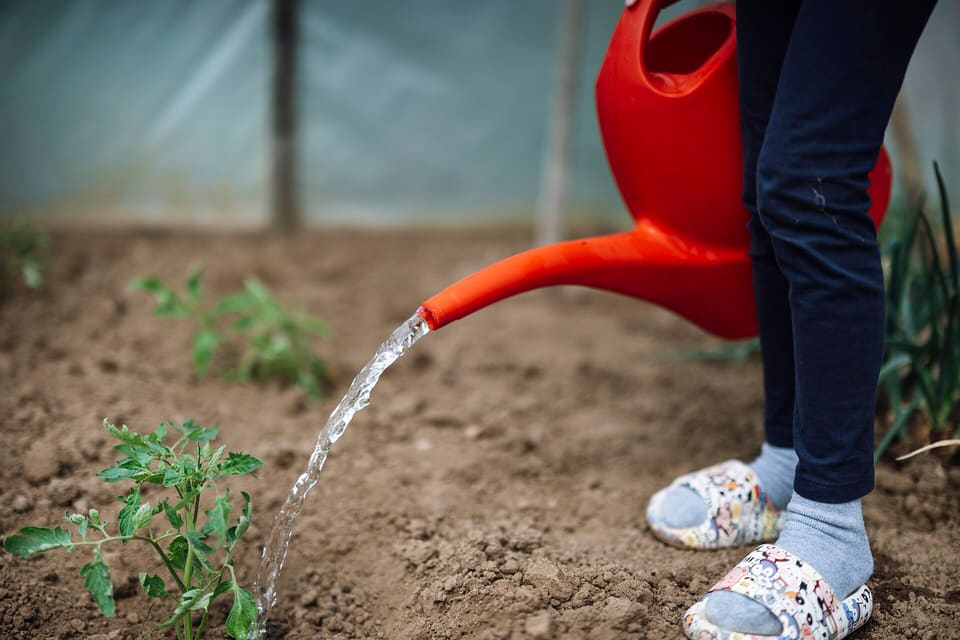
A sprinkler throws water on paths, leaves, and air. A watering can or a hose aimed at the base of each plant uses much less.
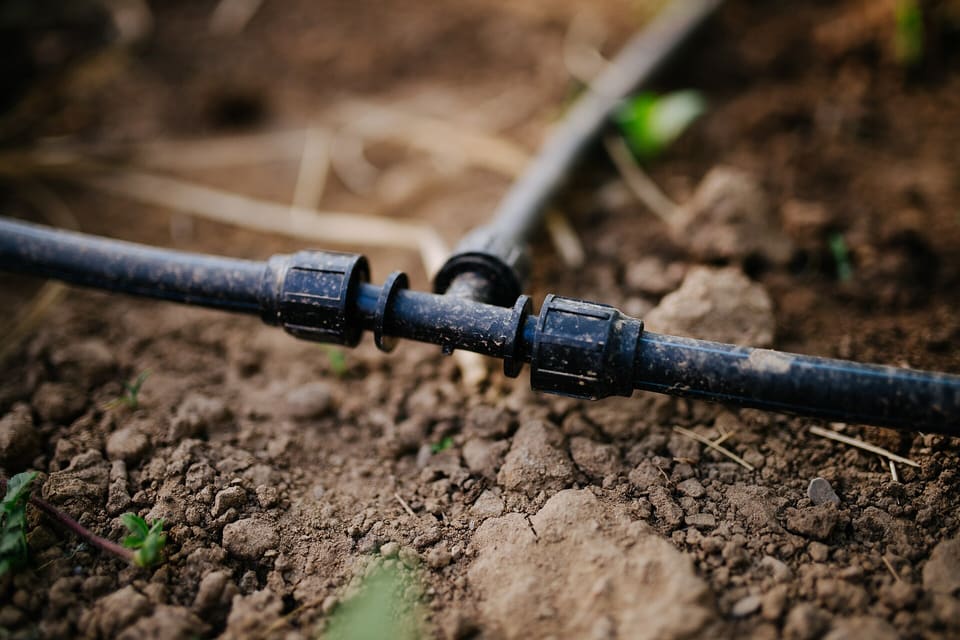
For beds and rows, a drip line or a soaker hose under the mulch is the most efficient method. Water seeps out slowly, right at the roots, and almost none of it evaporates. The comparison of drip irrigation and soaker hoses explains which one fits which bed.
Mulch: the largest saving for the least work
Bare soil loses water to sun and wind all day. A layer of mulch shades the soil, slows evaporation, and keeps down the weeds that compete for water.
- Use wood chips or bark around trees, shrubs, and perennials.
- Use straw, grass clippings in thin layers, or shredded leaves in the vegetable garden.
- Spread it 2 to 3 inches deep.
- Water the soil well before you put the mulch on.
Organic mulch breaks down slowly and feeds the soil, so top it up each year.
Build soil that holds water
Soil with a lot of organic matter works like a sponge. Sandy soil holds water longer with compost in it, and clay soil lets water in more easily. Spread an inch or two of compost on your beds once a year. The guide on how to improve garden soil naturally has the full method, and you can make the material yourself when you start composting at home.
Collect rainwater
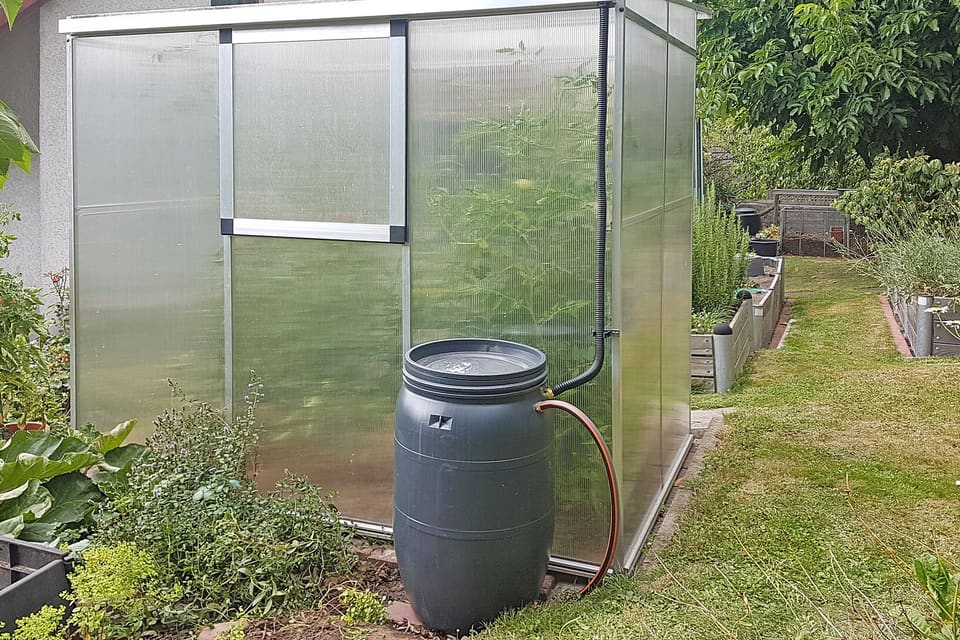
A roof collects a surprising amount of water in a single shower. A rain barrel on a downspout stores it for dry weeks.
- Put the barrel on a firm, raised base, so a watering can fits under the tap.
- Keep a tight lid or a fine screen on it. This keeps out leaves, mosquitoes, and small animals.
- Fit an overflow that leads the extra water away from the house.
- Use the water on the soil, and use it regularly, so the barrel has room for the next rain.
Rules on rainwater collection differ from place to place, so check what applies where you live.
Choose plants that need less
A plant in the right place needs little help. Put thirsty plants together near the tap, and put tough plants in the dry, sunny spots.
- Many herbs from dry climates, such as lavender, rosemary, sage, and thyme, prefer dry soil once they are established.
- Plants with gray, narrow, or fleshy leaves usually handle drought well.
- Plants that are native to your region are used to your rainfall.
- Plant in fall where you can. The plants root in with the help of fall and winter rain.
Lawns use more water than any other part of most gardens. Mow a little higher in summer, so the grass shades its own roots. An established lawn that turns brown in a dry spell is usually dormant, and it turns green again when the rain returns.
Mistakes that waste water
- Watering every day by habit, without a soil check
- Watering leaves and not soil
- Leaving soil bare between plants
- Letting a hose run on hard ground, where the water runs off
- Planting thirsty plants in the hottest, driest corner
Start with the two changes that save the most: check the soil before you water, and cover it with mulch.