Container gardening for beginners comes down to three things: a pot with drainage holes that is big enough for the plant, fresh potting mix, and regular watering. Get those right and you can grow herbs, salad leaves, flowers, and even tomatoes on a balcony, a doorstep, or a patio.
What kind of pot should you use?
Almost anything that holds soil and lets water out will work. The material changes how often you water:
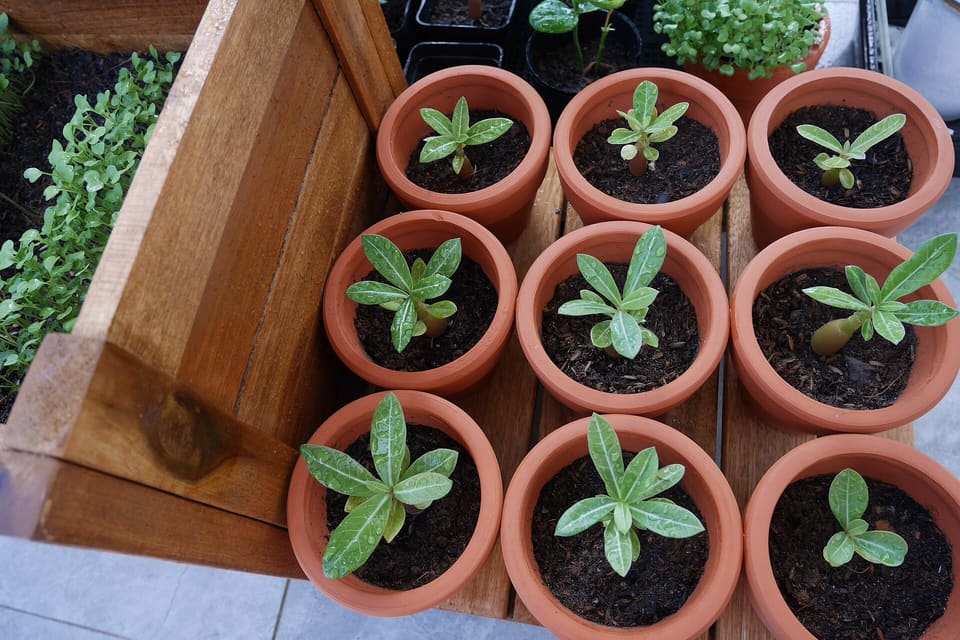
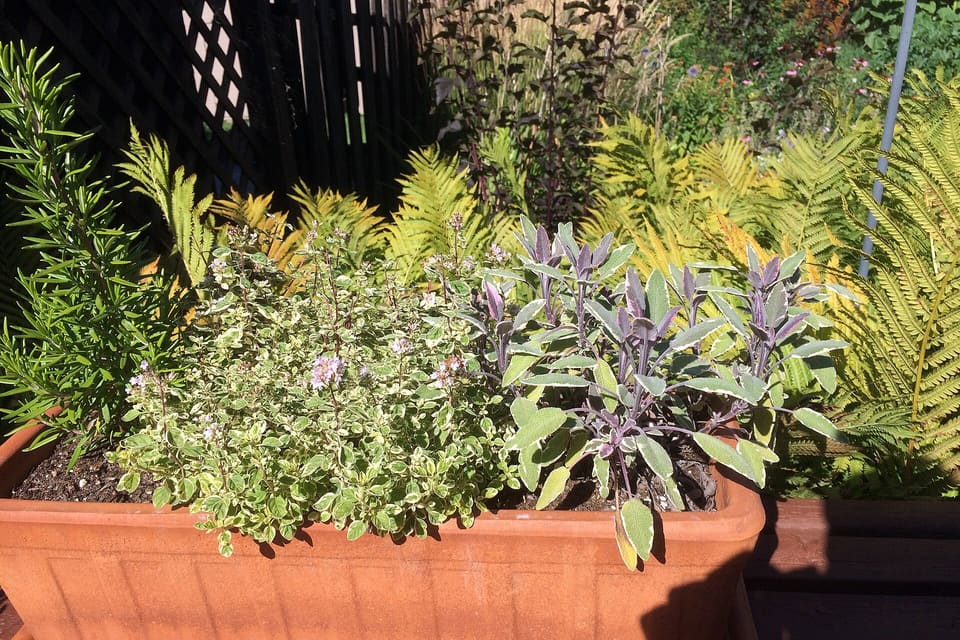
- Terracotta looks good and lets air reach the roots, but it is porous. It dries out fast in summer and can crack in a hard frost.
- Plastic and resin are light, cheap, and hold moisture well. They are a good choice for thirsty plants and for balconies where weight matters.
- Glazed ceramic holds moisture like plastic but is heavy. Use it for plants that stay in one place.
- Fabric grow bags drain very well and fold flat in winter. They dry out quickly, so they suit gardeners who water daily.
- Wood insulates roots from heat and cold. Line it or expect it to rot after some years.
Dark pots in full sun heat up, which can stress roots. In a hot spot, choose a light color or shade the pot with other pots.
Whatever you choose, look at the bottom. If there are no holes, drill some. Do not add a layer of gravel in place of holes. Gravel does not improve drainage, and it takes away space that roots could use.
How big should the pot be?
Small pots are the most common beginner mistake. A small volume of mix dries out in hours on a hot day, and the plant stalls. When you are not sure, go one size up.
| Plant | Minimum pot size |
|---|---|
| Basil, parsley, chives, thyme | 6 to 8 inches wide |
| Lettuce, spinach, radishes | 6 inches deep, as wide as you like |
| Bush beans, chard, kale | 2 to 3 gallons per plant |
| Peppers, eggplant | 3 to 5 gallons per plant |
| Bush (determinate) tomatoes | 5 gallons per plant |
| Tall (indeterminate) tomatoes | 10 gallons or more per plant |
Carrots need depth more than width. Choose a pot at least 12 inches deep, or grow a short, round variety.
What do you fill it with?
Use bagged potting mix. It is made to stay loose and drain well in a pot. Soil from the garden packs down hard in a container, drains badly, and can bring weeds and pests with it.
Fill the pot to about an inch below the rim. That gap holds water while it soaks in. You can blend a few handfuls of finished compost into the mix for vegetables. If you make your own, the guide to starting a compost pile at home explains how to know when it is ready.
Where should the pots go?
Watch your space for a day before you plant. Count the hours of direct sun.
- 6 to 8 hours or more: tomatoes, peppers, beans, squash, most herbs, most flowers.
- 3 to 5 hours: lettuce, spinach, chard, kale, parsley, mint, chives.
- Less than 3 hours: grow foliage plants and shade flowers instead of vegetables.
The good news about containers is that you can move them. Put pots on wheeled stands if they are heavy. Group pots together so they shade each other's sides and are quicker to water. Keep them close to a tap or a rain barrel, because you will carry a lot of water in July.
How do you water containers?
Push a finger into the mix up to the second knuckle. If it feels dry at that depth, water. If it feels damp, wait.
When you water, do it slowly and thoroughly until water runs out of the bottom. A quick splash wets only the top and leaves the roots dry. In mild weather, most pots need water every two or three days. In hot or windy weather, expect to water once a day, and small pots twice.
Water in the morning when you can, and aim at the mix, not the leaves. A layer of mulch on top of the pot, such as shredded bark or straw, slows evaporation. There are more ideas like this in the guide on how to save water in the garden. Tomatoes are a special case, and there is a separate post on how often to water tomatoes in pots.
Do potted plants need feeding?
Yes. Every watering washes a little nutrition out of the pot, and the roots cannot reach out for more. Most potting mixes contain enough food for the first few weeks. After that, feed leafy and fruiting plants through the growing season with a fertilizer made for containers, and follow the rate on the label. More is not better: too much fertilizer burns roots and gives you soft, weak growth.
Five easy plants to start with
- Basil. Fast, forgiving, and happy in an 8-inch pot in full sun. Pinch out the tips to keep it bushy.
- Cut-and-come-again lettuce. Sow thickly in a wide, shallow pot and cut leaves when they are a few inches tall.
- Bush beans. They need no support and crop in about two months.
- Cherry tomatoes. Choose a bush variety, a 5-gallon pot, and your sunniest spot.
- Marigolds or nasturtiums. Bright, tough flowers that fill gaps and bring in insects.
For timing, the guide to what to plant in each season shows which crops go in when.
Common mistakes to avoid
- A saucer that stays full. Roots that sit in water rot. Empty saucers after heavy rain.
- Too many plants in one pot. Crowded plants compete for water and stay small. Follow the spacing on the seed packet.
- Forgetting pots in a heat wave. Check twice a day when it is very hot, and move small pots into afternoon shade.
- Leaving pots out all winter without a thought. Empty terracotta can crack when wet mix freezes. Store it dry, or raise pots on feet so they drain.
Start with three or four large pots, not a dozen small ones. You will water less, and the plants will thank you for the room.