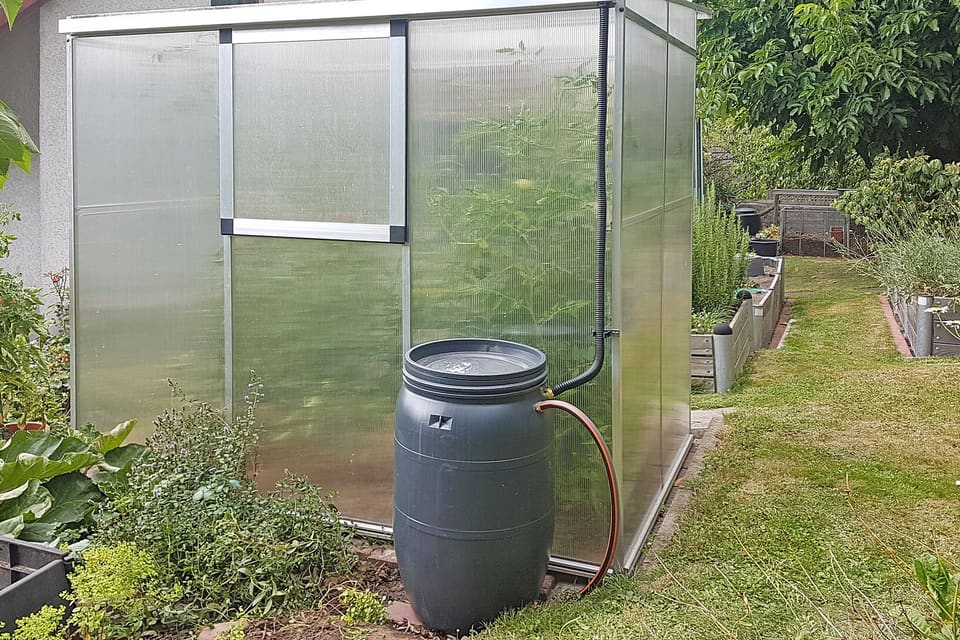
The simplest way to collect rainwater for the garden is to put a closed barrel under a roof downspout, raise it on a firm base, and fit it with a tap, a screen, and an overflow. A roof catches far more water than most people expect, so even one barrel gives you soft, free water for pots and seedlings through a dry spell. This guide shows how to choose the barrel, set it up, and keep the water in good condition.
How much rain can a roof collect?
A lot. One inch of rain on 1,000 square feet of roof gives about 600 gallons of water. A garden shed with a roof of 100 square feet still gives about 60 gallons from that one inch, which is more than a typical barrel holds.
So the limit is not the rain. It is how much you can store. Start with one barrel on the downspout that is nearest to your beds, and add more when you see how fast it fills.
Is it allowed where you live?
In most places, yes. Rules on rainwater collection differ by place, though. Some regions limit how much you can store, some have rules for how a barrel is connected, and some offer money back or cheap barrels to encourage it. Check with your local water authority or town office before you buy.
What should you look for in a barrel?
- A size of 50 to 80 gallons for a first barrel. It is large enough to be useful and small enough to place easily.
- A dark, solid color. Light makes algae grow. Do not use a clear or pale container.
- A lid that closes tightly, so children, pets, and wildlife cannot fall in.
- A fine screen over the inlet to keep out leaves and mosquitoes.
- A tap near the bottom and an overflow outlet near the top.
- A food-grade history if it is reused. Do not use a drum that once held oil, fuel, or chemicals.
How do you set up a rain barrel?
- Pick the downspout that is nearest to where you water. Carrying cans across the garden gets old fast.
- Build a firm, level base. A full 55-gallon barrel weighs more than 450 pounds. Use concrete blocks or a strong wooden stand on packed ground. A wobbly base is dangerous.
- Raise the barrel 12 to 24 inches. The water flows by gravity alone, so height gives you pressure and lets a watering can fit under the tap.
- Connect the downspout. A diverter kit fits into the downspout and sends water through a short hose to the barrel. When the barrel is full, the water goes down the spout as before. This is the neatest method. The other way is to cut the downspout and aim it into the screened top of the barrel.
- Fit the overflow. Attach a hose to the overflow outlet, and lead it at least a few feet away from the house, onto a bed or a lawn that slopes away. Never let overflow pool against a wall or a foundation.
- Check the first fill. Look for leaks at the tap and the fittings, and make sure the base has not shifted.
How do you keep the water clean?
Rainwater washes dust, leaves, and bird droppings off the roof. A few habits keep the barrel from turning sour.
- Clean the gutters in spring and in fall. Most of the dirt in a barrel comes from them.
- Keep the screen clear. Brush off leaves after a storm.
- Keep the lid on. Darkness stops algae, and a closed barrel stays cooler.
- Use the water. Water that sits for weeks goes stale. A barrel that is emptied and refilled often stays fresh.
- Rinse the barrel once a year. Empty it, scrub the inside with a stiff brush and water, and flush out the sludge at the bottom.
How do you stop mosquitoes?
Mosquitoes lay eggs in still water, and the young need about a week to grow. Close every way in. Cover the inlet and the overflow with fine mesh, with holes of about one-sixteenth of an inch or smaller, and seal any gap around the lid. Check the mesh for tears each month in summer.
How should you use rainwater on plants?
Rainwater is soft and has no chlorine, and most plants do well on it. It is especially good for acid-loving plants such as blueberries, azaleas, and camellias, and for houseplants that react to hard tap water.
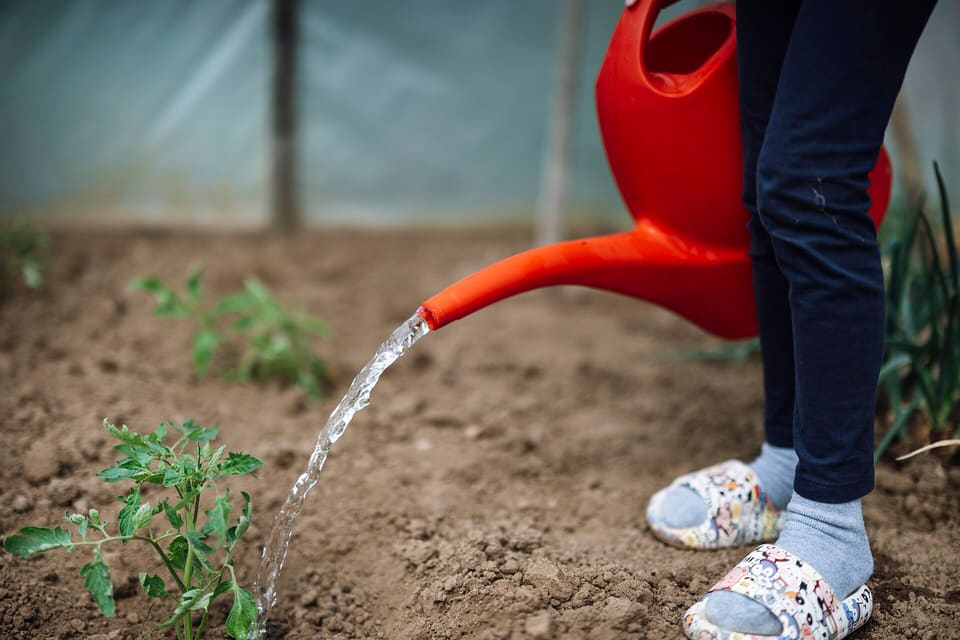
- Water the soil, not the leaves. This matters most for vegetables. Pour the water at the base of the plant.
- Keep it off leafy crops that you eat raw in the days before you pick them, and wash all harvests in tap water.
- Use tap water for seeds and young seedlings. They are more easily harmed by the germs that roof water can carry.
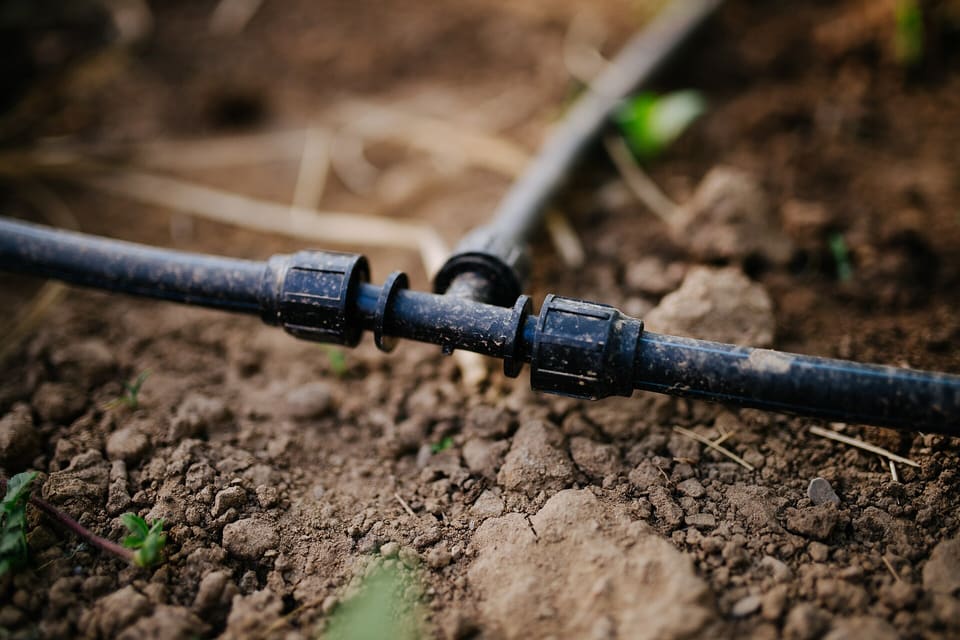
- Fill a can at the tap for pots and containers. Barrel pressure is too low for most sprinklers, but it can feed a soaker hose on level ground. The comparison of drip irrigation and soaker hoses explains which systems work at low pressure.
If your roof is old or treated with moss killer, or if it has lead or copper parts, use the water on flowers, shrubs, and lawns only, and not on food crops.
What do you do in winter?
Water expands when it freezes, and a full barrel can split. Before the first hard freeze:
- Drain the barrel completely and leave the tap open.
- Disconnect it, or switch the diverter back so that water goes down the spout.
- Turn the barrel upside down, or store it under cover.
- Reconnect it in spring, after the last hard frost.
Make the water go further
A barrel is one part of a garden that needs less water. Mulch keeps the water that you pour on the soil from drying off again, and the guide on how to mulch a garden shows how to lay it. For watering at the right time and choosing plants that need less, see the full guide on how to save water in the garden.