To repot a houseplant, water it the day before, slide it out of its pot, loosen the outer roots, and set it at the same depth in a pot that is 1 to 2 inches wider, with fresh potting mix around it. Then water it well and keep it out of direct sun for a week or two. The work takes ten minutes. Most of the skill is in the timing and the pot size.
How do you know that a plant needs a new pot?
Most houseplants are happy in the same pot for one to three years. Look for these signs:
- Roots grow out of the drainage holes or show on the surface.
- Water runs straight through, and the mix is dry again in a day or two.
- The plant is top-heavy and falls over.
- Growth has slowed in spring and summer, although light and water are right.
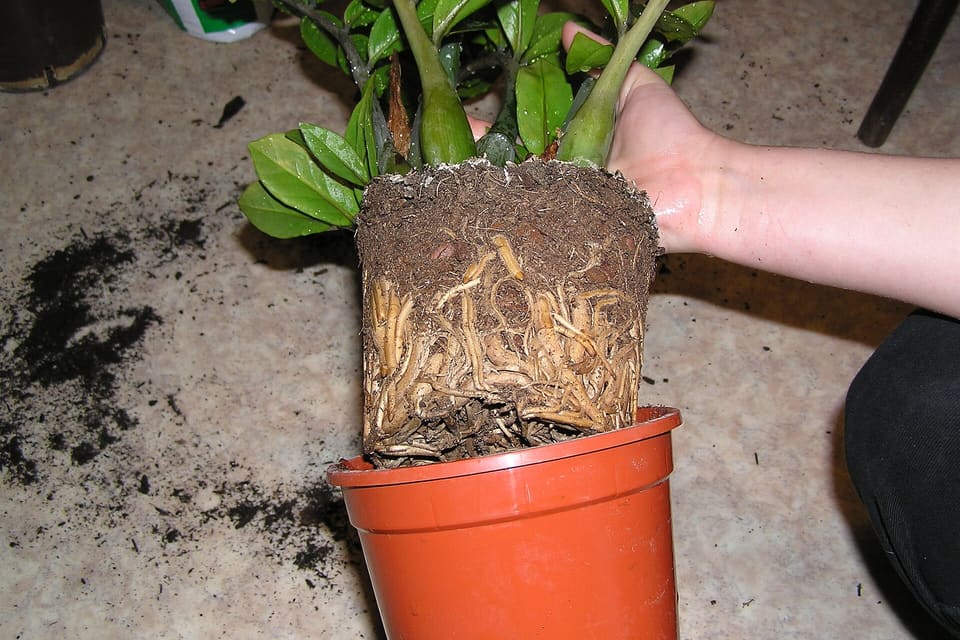
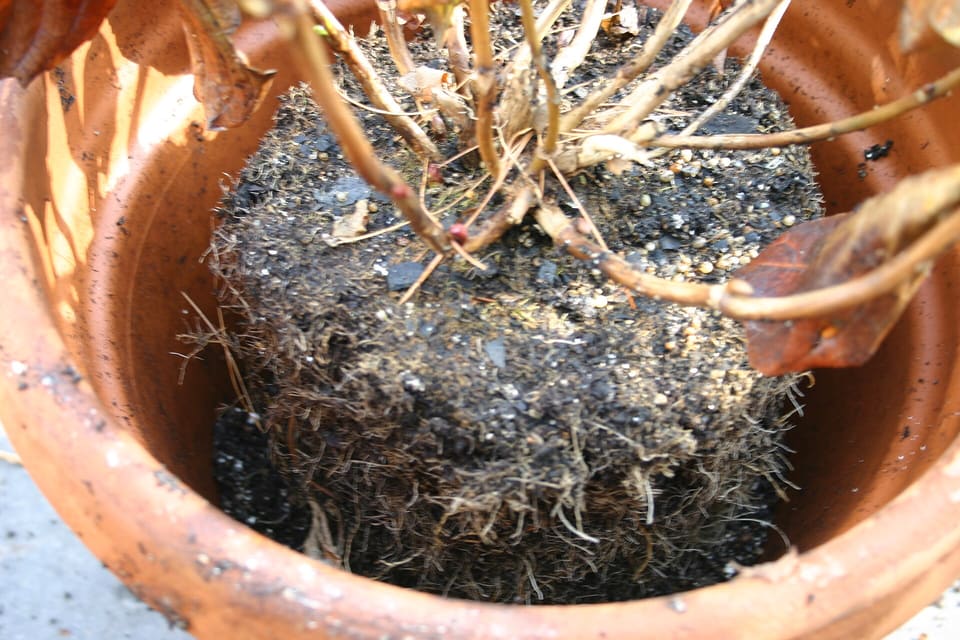
- When you slide the plant out, you see more roots than mix, and the roots circle the pot.
One sign alone is not always enough. If you are not sure, slide the plant out and look. It does no harm.
A plant that looks sick is a different case. Yellow leaves and wet mix point to a watering problem, not a small pot. Follow the steps to save an overwatered houseplant before you think about a larger pot.
When is the best time?
Spring is best. The days get longer, the plant starts to grow, and new roots fill the fresh mix fast. Early summer is fine too.
Avoid late fall and winter if you can. The plant rests, the new mix stays wet for a long time, and wet, cold mix around resting roots is the start of root rot. Also wait if the plant is in flower: it can drop its buds.
Which pot and which mix?
The pot
Choose a pot that is 1 to 2 inches wider than the old one. For a large floor plant, 2 to 3 inches is fine.
It is natural to pick a much bigger pot, to save work later. Do not do it. A small root ball in a large pot sits in a mass of wet mix that it cannot use, and the roots rot.
The pot must have a drainage hole. If you like a decorative pot with no hole, use it as a cover: put the plant in a plain plastic pot inside it, and pour away the water that collects.
The mix
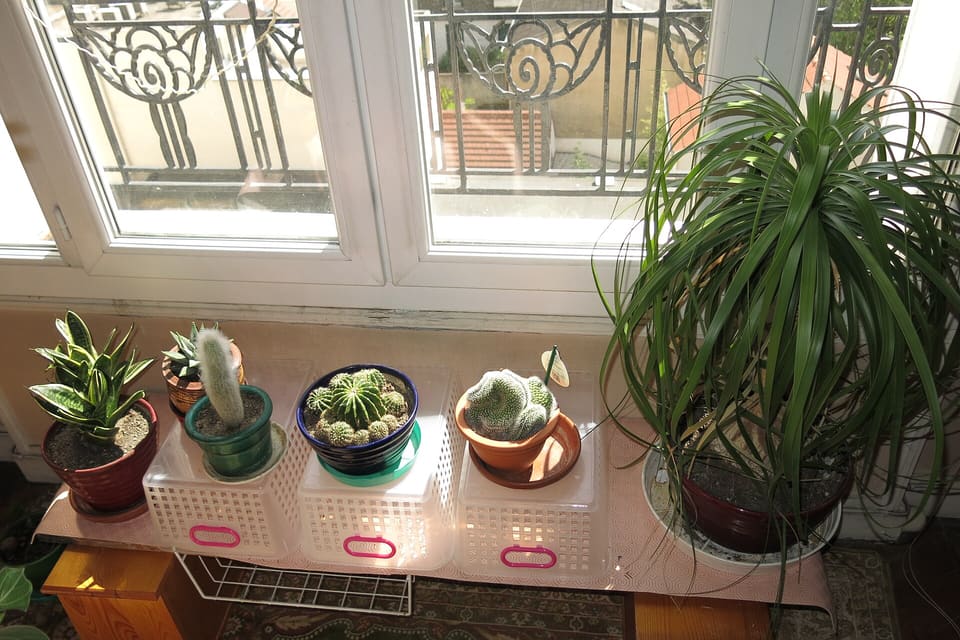
Use a fresh, general potting mix for most foliage plants. For cacti and succulents, use a cactus mix or add coarse sand or perlite to make the mix drain faster. Orchids need bark, not potting mix.
Do not use soil from the garden. It packs down hard in a pot and holds too much water. The guide to houseplant care for beginners has more about pots and mixes.
How to repot, step by step
- Water the day before. A moist root ball holds together and slides out more easily. A dry one breaks apart.
- Prepare the new pot. Put a layer of fresh mix in the bottom, deep enough that the top of the root ball will sit about an inch below the rim. Do not add stones or broken pots at the bottom: they do not help the drainage.
- Slide the plant out. Turn the pot on its side, hold the base of the stems, and tap or squeeze the pot. If it does not move, run a knife around the inside. Do not pull hard on the stems.
- Loosen the roots. Tease the outer roots apart with your fingers, most of all the ones that circle the bottom. Cut off roots that are brown and soft. If the root ball is very tight, make three or four shallow cuts down its sides.
- Set the plant and fill. Place the plant in the middle, at the same depth as before. Fill around it with mix and press gently with your fingers. Firm, not hard: the roots need air.
- Water well. Water slowly until water runs from the drainage hole. If the mix sinks, add a little more.
What should you do in the weeks after?
A repotted plant has disturbed roots, so make its life easy for a while.
- Light: keep it in bright light but out of direct sun for one to two weeks.
- Water: check with a finger. Fresh mix holds more water than the old, root-filled mix did, so you will water less often than before.
- Food: do not feed for four to six weeks. Fresh mix has nutrients, and fertilizer can burn roots that are still healing.
Some drooping or a lost leaf in the first week is normal. The plant puts its energy into roots first. New leaves usually follow in a few weeks.
What if the plant is too big to repot?
A large plant in a heavy pot does not need to come out every time. Scrape away the top 1 to 2 inches of old mix with a spoon or a hand fork, without tearing the main roots, and replace it with fresh mix. Do this each spring. It is called top dressing, and it keeps a big plant healthy for years.
What to do with the old pot and mix
Wash the old pot with hot water and a brush before you use it again, so no pests or disease pass to the next plant. Old mix from a healthy plant can go on the compost pile or onto a garden bed. If you have more ideas than space, the post on zero-waste gardening shows what else you can reuse.
And if this is your first plant and all of this feels like a lot, go back to the first steps for a complete beginner. One pot and one plant are enough to learn on.