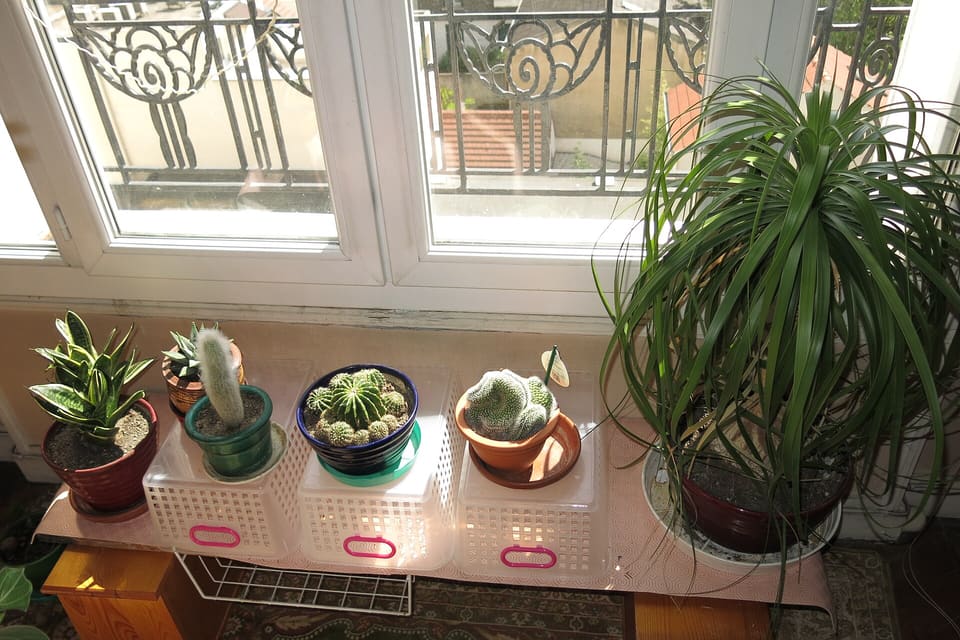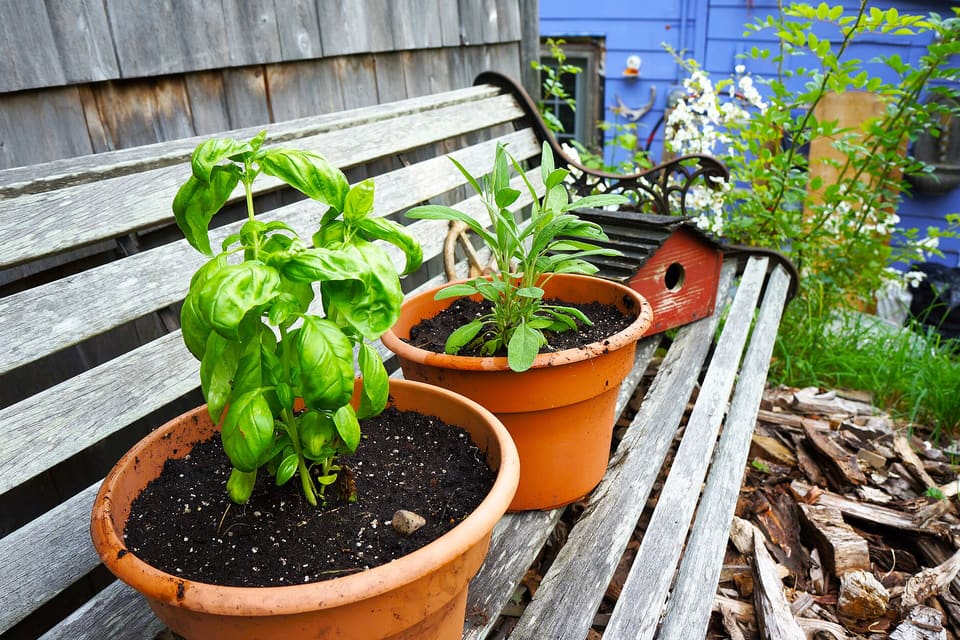
You can grow herbs indoors all year if you give them your brightest window, a pot that drains, and a light hand with the watering can. Light is the part that most people get wrong. A herb that sits a few feet back from the glass gets a small part of the light that it would get outdoors, and it grows thin and pale. Put the pots right on the sill of a sunny window, and most kitchen herbs will give you fresh leaves in every season.
Which herbs grow best indoors?
Start with the forgiving ones, and add the fussy ones when you have a feel for it.
| Herb | Light | How easy | Notes |
|---|---|---|---|
| Chives | Medium to bright | Very easy | Cut to an inch above the soil, and they grow back. |
| Mint | Medium to bright | Very easy | Give it a pot of its own. It crowds out neighbors. |
| Parsley | Medium to bright | Easy | Slow from seed, so buy a young plant. |
| Thyme | Bright, direct | Easy | Likes to dry out between waterings. |
| Oregano | Bright, direct | Easy | Trim the tips to keep it bushy. |
| Rosemary | Bright, direct | Medium | Needs sun and cool air. Hates wet roots. |
| Basil | Bright, direct, warm | Medium | Suffers below about 50°F and in cold drafts. |
| Cilantro | Bright, cool | Hard | Runs to seed fast. Sow a little every few weeks. |
If you are new to plants in general, the page with first steps for a complete beginner is a gentler place to begin.
How much light do indoor herbs need?
Most herbs come from open, sunny places. Indoors, that means a south or west window with at least 6 hours of direct sun on the leaves. An east window with morning sun is enough for chives, mint, and parsley.
Winter is the hard season. The days are short, the sun is low, and window glass cuts the light further. If your herbs stretch toward the window, with long gaps between the leaves, they are telling you that they need more.
- Move the pots as near to the glass as you can, but do not let leaves touch a freezing pane.
- Turn each pot a quarter turn every few days, so the plant grows straight.
Do you need a grow light?
Not always, but a grow light turns a dim kitchen into a place where herbs grow well. A simple LED grow light is enough. Hang it a few inches above the plants and run it for 12 to 14 hours a day on a timer. Raise the light as the plants grow.
What pot and soil should you use?
- Drainage holes are not optional. Herbs rot fast in a pot that holds water. Stand each pot on a saucer and empty the saucer after you water.
- Pick a pot 6 inches wide or more for one plant. Small pots dry out in a day and stunt the roots.
- Use potting mix, not garden soil, which packs down hard indoors. For thyme, oregano, and rosemary, mix in some coarse sand or perlite so the water runs through faster.
The general rules for pots and mixes are the same as for other indoor plants, and the guide to houseplant care for beginners covers them in more detail.
How often should you water?
Check with a finger, not with a calendar. Push it into the mix up to the first knuckle.
- Dry at that depth: water slowly until water runs out of the holes.
- Still damp: leave it and check again in a day or two.
Basil, parsley, mint, and chives like the mix to stay lightly moist. Thyme, oregano, and rosemary want the top inch or two to dry out fully first.
In winter, plants grow slowly and drink less. Most indoor herbs that die in winter die from too much water, not too little. Yellow lower leaves and a pot that feels heavy are the warning signs.
How do you harvest so the plant keeps growing?
Cutting is what keeps a herb bushy. A plant that you never cut grows tall, flowers, and stops making good leaves.
- Basil, mint, and oregano: cut a stem just above a pair of leaves. Two new shoots grow from that point.
- Chives and parsley: cut the outer leaves near the base, and leave the center to grow.
- Thyme and rosemary: snip the soft tips. Do not cut back into bare, woody stems, because they rarely sprout again.
Take no more than a third of the plant at one time, and give it a week or two to recover. Pinch off flower buds on basil as soon as you see them.
Do indoor herbs need feeding?
A little. Fresh potting mix has enough food for the first six to eight weeks. After that, give a liquid plant food at half the strength on the label about once a month from spring to early fall. Do not feed in the dark of winter unless the plants are under a grow light and still growing.
What goes wrong, and how do you fix it?
- Long, pale, floppy stems: not enough light. Move the pot or add a grow light, then cut the plant back by a third.
- Yellow leaves from the bottom up: too much water. Let the mix dry, and check that the holes are not blocked.
- Brown, crisp leaf tips: dry air or a hot spot above a radiator. Move the pot away from the heat.
- Sticky leaves and clusters of small insects: aphids. Rinse them off under the tap, as the post on how to get rid of aphids without chemicals describes.