To save an overwatered houseplant, stop watering, take the plant out of its pot, and look at the roots. If the roots are firm and pale, the plant only needs to dry. If they are brown and soft, cut away the rot and repot the plant in fresh, dry mix. The earlier you do this, the better the chance. Many plants recover in a few weeks.
How do you know that a plant is overwatered?
Too much water does not drown the leaves. It fills the air spaces in the soil, and roots without air start to die. Dead roots cannot take up water, so the plant looks thirsty although the soil is wet. This is why many people then water more, which makes it worse.
Look for these signs together:
- The lower leaves turn yellow and fall.
- The plant wilts, but the soil is damp when you push a finger 2 inches into it.
- The stems are soft or dark at the base.
- The soil smells sour or musty.
- Small black flies move around the soil surface. These fungus gnats breed in mix that stays wet.
- The pot is heavy days after you watered.
Dry, crisp, brown leaves and light, dusty soil point to the opposite problem.
Step 1: Stop watering and move the plant
Do not add water. Empty the saucer or the outer pot, because roots that stand in water rot fast. Move the plant out of direct sun to a bright place with good air. A plant with damaged roots cannot replace the water that hot sun takes from its leaves.
Step 2: Look at the roots
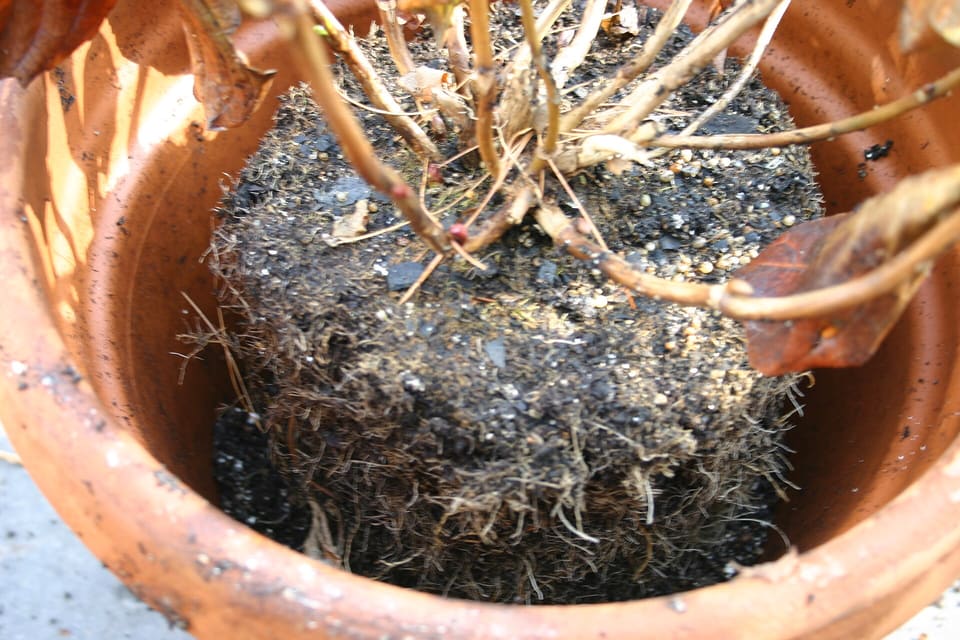
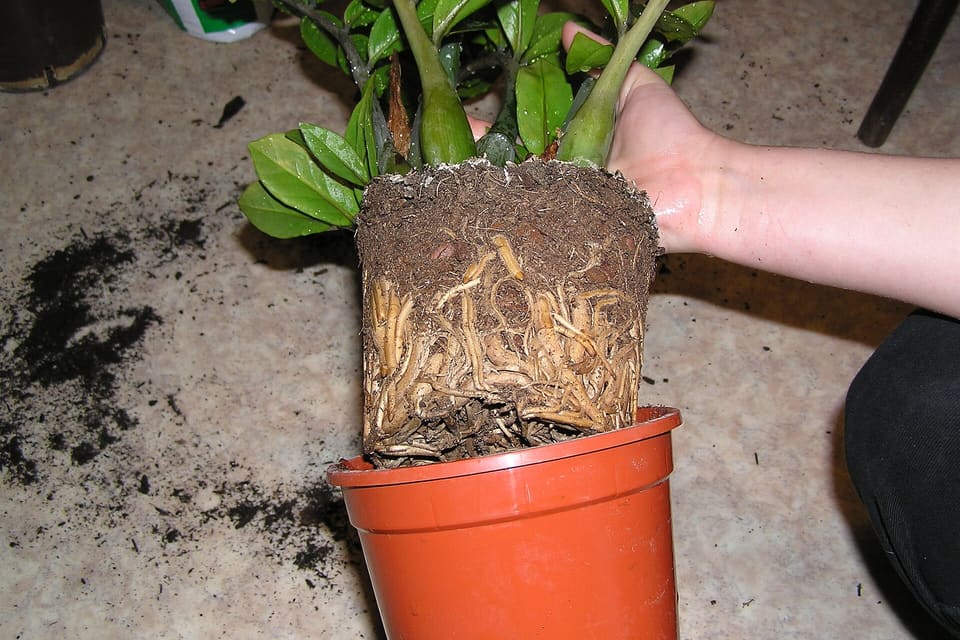
Lay the pot on its side and slide the plant out. Support the stem at the base and do not pull. Then decide between the two cases.
The roots are white or tan and firm. You found the problem in time. Go to "If the roots are healthy" below.
Some roots are brown or black, soft, and smell bad. This is root rot. The outer layer of a rotten root often slides off between your fingers and leaves a thin thread. Continue with step 3.
If the roots are healthy
Stand the root ball on a few layers of newspaper or an old towel for some hours. The paper pulls water out of the mix. Replace it when it is wet. Then put the plant back in its pot, or leave the root ball out in the air for a day if the mix is very wet.
Wait until the top 1 to 2 inches of the mix are dry before you water again. Remove the yellow leaves. They do not turn green again.
Step 3: Cut away the rot
Shake and tease the old mix away from the roots. You can rinse them with water at room temperature to see them better.
Clean a pair of scissors or pruners. Cut each rotten root back to firm, pale tissue. Be thorough: rot that stays continues to spread. Clean the blades again when you finish, so that you do not carry the problem to the next plant.
If you removed a large part of the roots, remove some of the leaves too. Start with the oldest and the most damaged, and take off up to a third. A small root system cannot support a full crown.
Step 4: Repot in fresh mix
- The pot. It must have drainage holes. Choose a pot that is only a little larger than the roots that remain. Often this is smaller than the old pot. A large volume of mix around a few roots stays wet for too long. If you use the old pot again, wash it with hot water and dish soap first.
- The mix. Use fresh potting mix. For plants that like to dry out, such as succulents, snake plants, and many aroids, add perlite or bark so that water drains faster.
- No layer of stones. A layer of gravel at the bottom does not improve the drainage. It only leaves less room for roots.
Set the plant at the same depth as before and firm the mix lightly around it.
Step 5: Give it time
Water lightly one time so that the mix settles around the roots, and let all extra water drain out. Then wait. Water again only when the top inch or two of the mix is dry.
Keep the plant in bright light without direct sun, away from heaters and cold drafts. Do not feed it. Fertilizer can harm damaged roots, and the fresh mix has sufficient food. Start to feed again when you see new leaves, which is the sign that the roots work again. This can take 2 to 6 weeks, and the plant can lose a few more leaves in the first days.
What if most of the roots are gone?
If the base of the stem is soft and no firm roots remain, the plant itself will probably not live. But you can often keep it in a different way. Cut a healthy stem tip or leaf and root it in water or in fresh mix. Pothos, philodendron, tradescantia, and many succulents root easily from cuttings.
How to prevent it next time
Water when the plant needs it, not by the calendar. Push a finger into the mix up to the second knuckle, and water only if it feels dry at that depth. Plants need less water in winter, when the light is low and growth is slow. Always empty the saucer about half an hour after you water.
A pot without holes is the most common cause of root rot. If you like a decorative pot, keep the plant in a plain pot with holes and stand it inside the other one.
For light, feeding, and the weekly routine, see the guide to houseplant care for beginners. The basic rules about pot size and drainage are the same outdoors, as the container gardening guide explains. You can find more help with indoor plants on the houseplants topic page.