Zero-waste gardening means that you buy less and throw away less, because you reuse what your home and your garden already produce. You do not need a special kit to start. Most of the materials are in your recycling bin, your kitchen, and your pile of prunings. Here are eight things to reuse, with the best job for each one.
1. Cardboard boxes
Plain brown cardboard is a good weed barrier. Remove the tape and the labels, lay the sheets on the soil with a hand-width of overlap, and wet them well. Then cover them with 2 to 4 inches of mulch, such as wood chips or leaves. The cardboard blocks light, so most weeds below it die. Worms pull it down into the soil in one growing season.
Use this method for a new bed on top of grass, or for the paths between beds. Do not use glossy or heavily printed boxes, because their coatings do not break down in the same way.
2. Newspaper
Newspaper does the same job as cardboard in narrow places, for example between rows of vegetables. Use 6 to 8 sheets together, wet them, and cover them with mulch so that the wind cannot lift them.
You can also roll a strip of newspaper around a small glass, fold in the base, and slide the glass out. The result is a seedling pot that you plant whole, so the roots are not disturbed.
3. Food tubs, trays, and cans
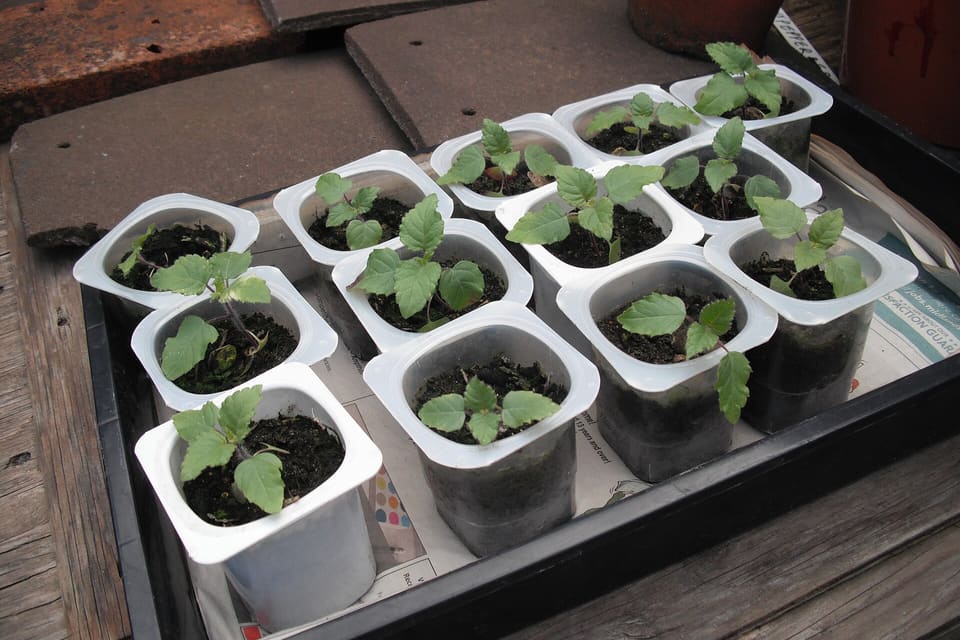
A yogurt tub, a mushroom tray, or a tin can holds a seedling as well as a new pot does. The one thing that it must have is drainage. Make 3 or 4 holes in the base with a nail or a drill before you fill it.
Wash each container with hot water and dish soap before you use it again. Old potting mix on the sides can carry disease from one year to the next. Clear tubs with a lid are useful too: with a few air holes in the lid, they become a small cover that keeps seeds warm and moist until they sprout.
If you want to grow full-size plants in reused containers, the guide to container gardening for beginners explains the pot sizes that different crops need.
4. Toilet paper tubes
Cardboard tubes are ideal for seeds with long roots, such as peas, beans, and sweet peas. Stand the tubes close together in a tray, fill them with potting mix, and sow one seed in each. Plant the tube with the seedling. Make sure that the top edge of the tube is below the soil surface, because an edge that stays in the air acts as a wick and dries the roots.
5. Glass jars and plastic bottles
A jar with a tight lid keeps saved seeds dry. Put the seeds in a paper envelope, write the name and the year on it, and store the jar in a cool, dark place.
A clear plastic bottle with its base cut off is a small cover for one young plant. Push it an inch into the soil and remove the cap on warm days so that the air can move. It protects a seedling from cold nights in spring and from slugs.
6. Cooking water and rainwater
Water is a material too. Let the water from boiled vegetables or eggs cool, and pour it on your pots, but only if you added no salt. Salt harms the soil and the roots.
A bucket or a barrel below a downspout collects rain that plants prefer to tap water. Cover it so that insects and leaves stay out. The guide to saving water in the garden shows more ways to use less from the tap.
7. Prunings and sticks
Straight prunings from shrubs and trees make free plant supports. Push branched twigs into the soil beside young peas, and they climb with no string. Longer, thicker stems become stakes for beans or tomatoes. Let them dry for a few weeks first, because a fresh willow or dogwood stem can grow roots.
Small, soft prunings can stay where they fall as mulch below shrubs. Hollow stems in a quiet corner give shelter to useful insects in winter.
8. Kitchen scraps and fall leaves
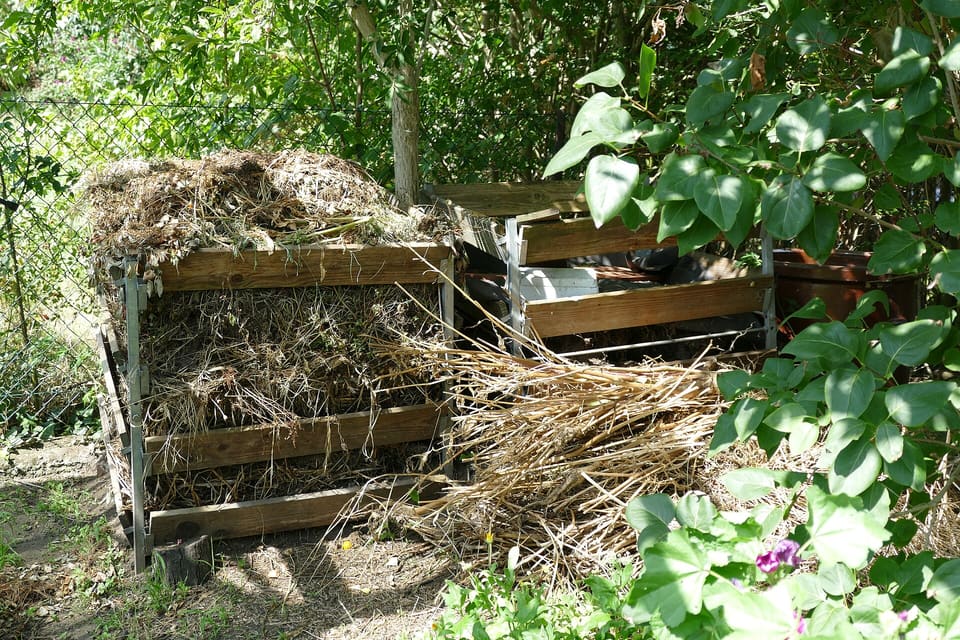
Vegetable peelings, coffee grounds, and tea leaves are the start of your own compost, and fallen leaves turn into a fine soil conditioner. Each process has its own steps, so each has its own page: see how to start composting at home and how to make leaf mold from fall leaves.
What should you not reuse in the garden?
Some waste makes more problems than it solves:
- Treated or painted wood. Old pressure-treated lumber and painted boards can release substances into the soil. Do not use them for vegetable beds.
- Glossy paper and magazines. The coatings break down slowly and badly.
- Diseased plants. Leaves with blight or mildew spread the problem if you use them as mulch.
- Weeds with seeds. They grow again where you put them.
- Containers that held chemicals. Paint, oil, and cleaning products leave traces that you cannot wash out.
Where to start
Do not try all eight at one time. Choose the waste that you have most of this week. If it is boxes, start a cardboard path. If it is tubs, save them for the spring sowing. One habit that stays is worth more than eight that you forget. For more ideas, look at the other sustainable gardening articles.