Organic pest control for vegetable gardens works in layers: grow strong plants, keep pests out with barriers, remove the first ones by hand, and let natural predators do the rest. A spray is the last resort. No single trick solves everything, but together these steps keep damage low enough that you still get a good harvest. A few holes in a leaf are normal, and they do not need a reaction.
Start with prevention
Pests find weak plants first. Most of the work of pest control is done before a pest arrives.
- Feed the soil. Plants in soil with a lot of organic matter grow steadily and recover from damage. The guide on how to improve garden soil naturally shows the method.
- Rotate your crops. Do not grow the same vegetable family in the same bed two years in a row. Many pests and diseases spend the winter in the soil and wait for the same plant to return.
- Give plants room. Crowded plants stay damp and are stressed. Follow the spacing on the seed packet.
- Water the soil, not the leaves, and water in the morning. Slugs and fungus like damp evenings.
- Clean up. Remove rotten fruit, diseased leaves, and old crop remains at the end of the season.
- Choose resistant varieties where the seed catalog offers them.
Look closely, twice a week
Walk through the garden with a cup of coffee and look. Turn leaves over, because most pests and their eggs are on the underside. Check new growth and the base of the stems.
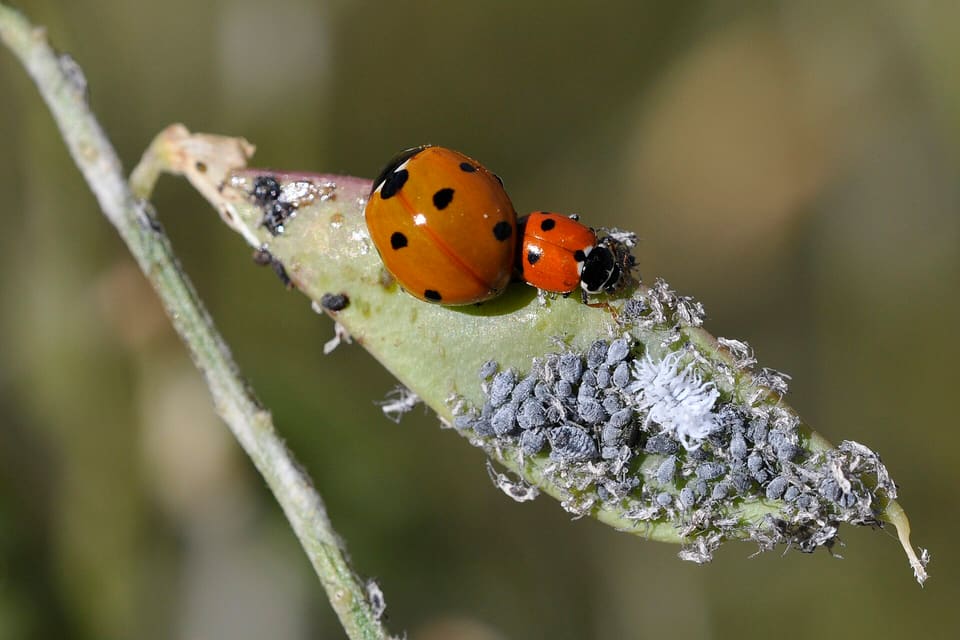
Learn to identify what you see before you act. Many insects in a garden are harmless or helpful. The larva of a ladybug, for example, looks like a small dark alligator and eats aphids by the hundred. If you are not sure, wait a day and look again.
Keep pests out with barriers
A physical barrier is the most reliable organic method, because the pest never reaches the plant.
- Insect mesh or row cover over hoops keeps cabbage butterflies, carrot flies, and flea beetles off the crop. Put it on at planting time, and bury or weigh down the edges. Crops that need pollination, such as squash, must be uncovered when they flower.
- Collars of cardboard around the stems of young plants stop cutworms.
- Netting keeps birds off berries and young brassicas. Pull it tight, so birds are not caught in it.
- Copper tape around pots and raised beds can help to turn slugs and snails away.
Pick pests off by hand
It is simple, and it works well in a small garden.
- Caterpillars and beetles: pick them off and drop them into a bucket of soapy water. Rub off the egg clusters under the leaves.
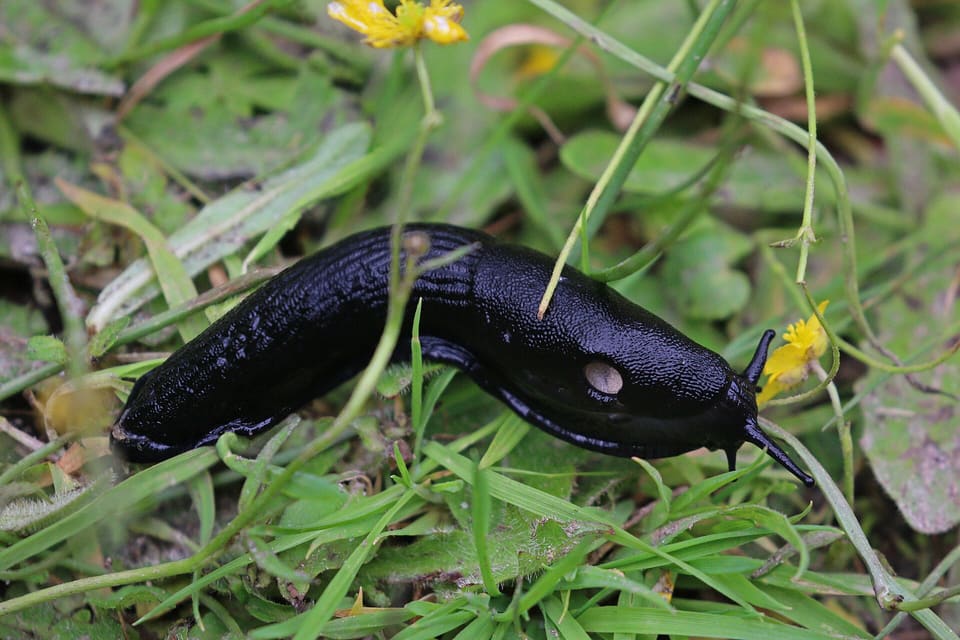
- Slugs and snails: go out after dark with a flashlight, or look under boards and pots in the morning. A board laid on the soil makes a trap that you check each day.
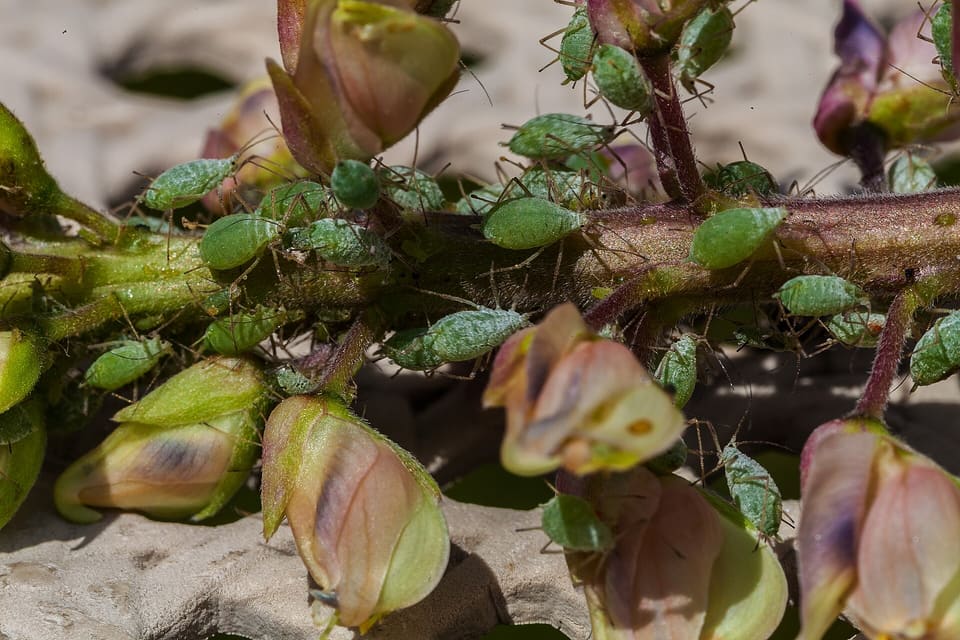
- Aphids: a firm spray of water from the hose knocks them off. Repeat it every few days. The post on how to get rid of aphids without chemicals covers them in detail.
Invite the helpers
A garden with many kinds of life has fewer pest outbreaks, because something is always there to eat the pest.
- Grow flowers among the vegetables. Small, open flowers such as dill, cilantro left to bloom, sweet alyssum, calendula, and yarrow feed hoverflies, lacewings, and tiny parasitic wasps. Their young eat aphids and caterpillars. The guide to plants for pollinators lists more.
- Give water. A shallow dish with stones brings in insects and birds. A small pond brings frogs and toads, which eat slugs.
- Leave some cover. A log pile, a hedge, or a corner of long grass gives ground beetles and other hunters a place to live.
- Accept a few pests. Predators come only when there is something to eat. If you remove every aphid, the ladybugs leave.
Mix your plants
A large block of one crop is easy for a pest to find. Smaller groups mixed with other plants are harder. Strong-smelling plants such as onions, garlic, and herbs between rows may confuse some pests, and they do no harm. A plant that pests like more can also work as a trap. Nasturtiums often draw aphids away from beans. Pull out the trap plant when it is covered.
When is a spray the right answer?
Sometimes a pest gets ahead of you. Organic sprays such as insecticidal soap exist, but they are not harmless. Most of them kill helpful insects as well as pests.
Ask yourself first if the damage matters. Holes in the outer leaves of a cabbage do not affect the head. Aphids on bean tips late in the season do not reduce the harvest much.
A simple routine for the season
- Spring: rotate the beds, add compost, and cover young brassicas and carrots with mesh on planting day.
- Early summer: check twice a week, rub off eggs, and pick off the first beetles and caterpillars.
- Midsummer: water in the morning, keep the flowers blooming, and remove sick leaves.
- Fall: clear the old crops, and note what had problems, so you can move or cover it next year.
For more ways to deal with single pests, see all the articles on garden pests.