The best vegetables to plant in July are fast crops that like warm soil now and crops that are happy to finish in cool weather later: bush beans, carrots, beets, kale, Swiss chard, summer squash, and lettuce. Sown in midsummer in a temperate garden, all seven can be ready before the first fall frost.
Do you still have time?
Midsummer sowing is a race against the first frost, so do one quick sum before you open a packet.
- Find the average first fall frost date for your area.
- Look at the "days to maturity" on the seed packet.
- Add about 14 days. Plants grow more slowly in the shorter, cooler days of early fall.
- Count back that many days from the frost date. That is your last good sowing date.
For example, a bush bean that needs 55 days becomes 69 days with the extra two weeks. If your first frost usually comes in mid-October, sow by early August. Frost-hardy crops such as kale and carrots give you more room, because a light frost does not hurt them.
If your frost comes early, pick the fastest varieties you can find and sow at the start of the month. For the full year's timing, see the guide to what to plant in each season.
The seven vegetables
1. Bush beans
Beans love warm soil and sprout in about a week in summer. Bush types crop in roughly 50 to 60 days and need no supports. Sow seeds 1 inch deep and 3 to 4 inches apart. Pole beans take longer, so stay with bush beans this late. Beans are tender, and the first frost ends the harvest.
2. Carrots
Carrots sown in midsummer mature in the cool of fall, which makes them sweeter. Most varieties take 60 to 80 days. Sow thinly, a quarter inch deep, and thin the seedlings to 2 inches apart. Carrot seed is slow, often taking two weeks or more to come up, and it must not dry out in that time. See the tip below. Carrots stand light frosts, so you can pull them over many weeks.
3. Beets
Beets are ready in about 50 to 60 days, and you can eat the young leaves while you wait. Sow half an inch deep. Each "seed" is a cluster that gives several seedlings, so thin them to 3 inches apart when they are a couple of inches tall. Pull the roots when they are between the size of a golf ball and a tennis ball.
4. Kale
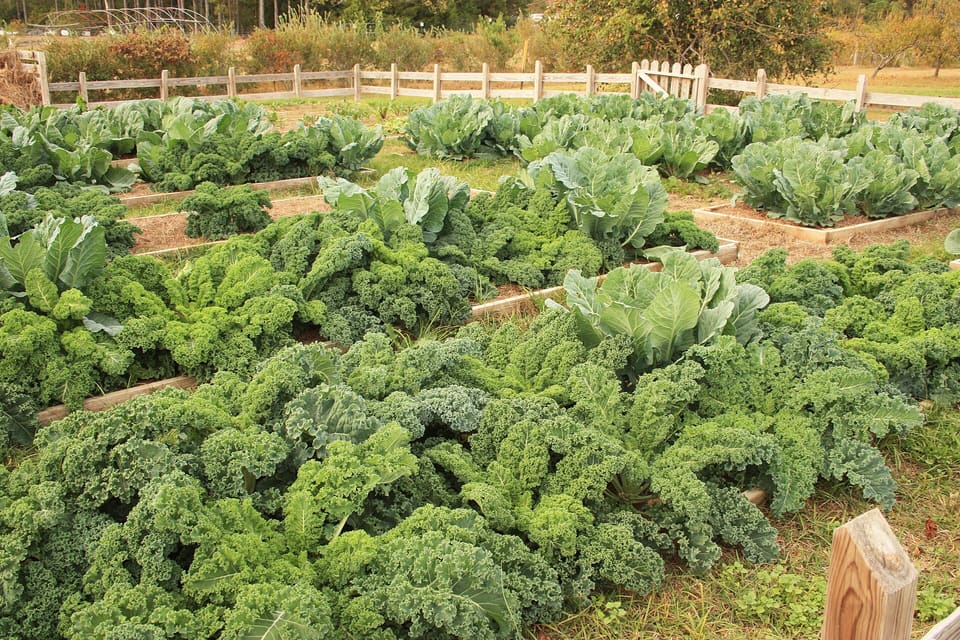
Kale is the star of the fall garden. It grows through summer, shrugs off frost, and tastes better after cold nights. Allow 50 to 65 days for full-size leaves, less for baby leaves. Sow half an inch deep, and thin plants to 12 to 18 inches apart. Watch for green caterpillars on the leaves in late summer and pick them off by hand. The guide to organic pest control for vegetable gardens explains how fine netting keeps the butterflies off.
5. Swiss chard
Chard handles heat better than spinach and keeps going until hard frost. Expect leaves to cut in 50 to 60 days. Sow half an inch deep and thin to 8 to 12 inches. Pick the outer leaves and leave the center to keep growing.
6. Summer squash
Zucchini and other summer squash are quick, at about 45 to 55 days from seed. A July sowing often does better than a spring one, because it misses the worst of the early-season pests and replaces tired spring plants as they fade. Sow two seeds 1 inch deep where each plant will grow, and remove the weaker seedling. Give each plant about 3 feet. Squash is tender, so sow in the first half of the month where frost comes early.
7. Lettuce
Lettuce is the tricky one, because the seed goes dormant in hot soil and the plants turn bitter and bolt in heat. Wait until later in the month, choose heat-tolerant or loose-leaf types, and sow in the shade of taller crops. Baby leaves are ready in about 30 days and full heads in 45 to 60. Sow a short row every two weeks into early fall for a steady supply.
How do you get seeds to sprout in summer heat?
In spring, the problem is cold, wet soil. In July, it is the opposite. The top half inch of soil can dry out and bake in a single afternoon, and a seed that has started to sprout and then dries out is dead.
- Water the row before you sow. Make the furrow, soak it, let it drain, then sow into the damp soil and cover.
- Sow a little deeper than you would in spring, where the soil stays moist for longer.
- Sow in the evening, so the seeds have a cool night to settle in.
- Water lightly every day until the seedlings are up, twice a day in a hot spell.
- Shade the seedbed. Shade cloth, an old sheet on hoops, or the shadow of a taller crop takes the edge off the midday sun.
Where do the new crops go?
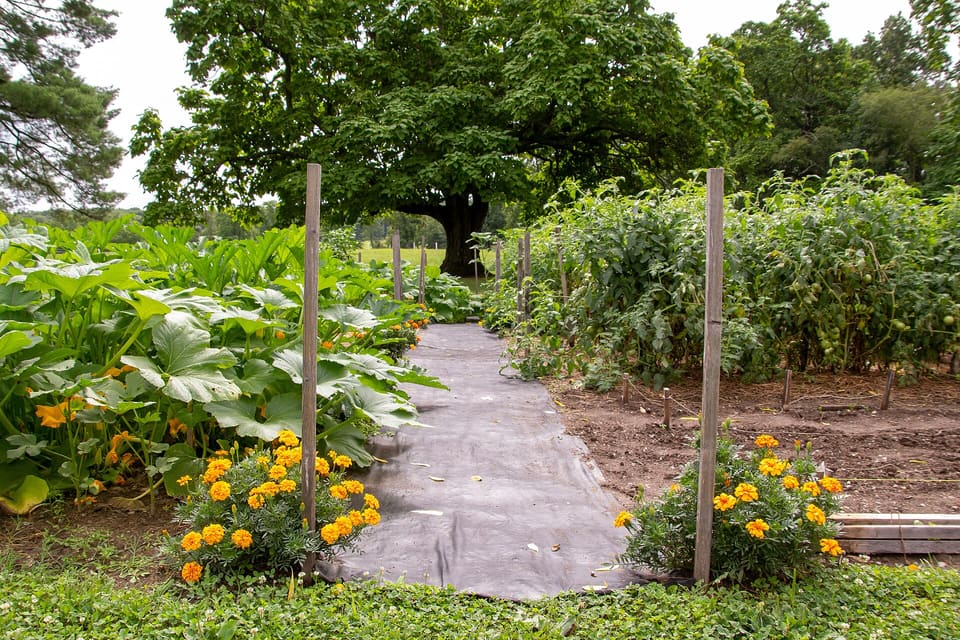
By midsummer, there are gaps. Spring peas, early lettuce, radishes, garlic, and the first potatoes have come out. Those empty spaces are where the July sowings go.
Before you sow, pull any weeds, loosen the top few inches with a fork, and spread an inch of finished compost. The first crop used up some of the soil's food, and the second crop needs it back. The guide on how to improve garden soil explains why a little compost between crops is enough.
Once the seedlings are a few inches tall, mulch around them with straw or grass clippings to hold moisture, and water deeply once or twice a week if it does not rain. A soaker hose or drip line makes this much easier in August. If you are not sure which suits your beds, compare drip irrigation and soaker hoses.
What if you miss July?
You still have choices. In August, you can sow radishes, spinach, arugula, turnips, and more lettuce, which are all quick and like cool weather. In fall, plant garlic for next summer. The month-by-month garden calendar shows what comes next.